
The fastest way to recycle plastic hangers is to hand them back to your dry cleaner, most shops will take them without charge. That only works if the hangers are still straight and intact; bent or cracked ones get rejected and land in the trash anyway. Roughly 34 billion hangers end up in landfills each year because the metal hooks and mixed plastics jam standard recycling machinery, so curbside bins are not the answer.
1. Curbside Recycling

Plastic hangers look like standard household recycling, but most curbside programs reject them outright. The problem starts with mixed materials: that metal hook embedded in the plastic body means sorting machinery cannot process them cleanly. Their unusual shape jams equipment further, and the low-grade plastics used, often unlabeled blends, carry no resale value worth the extraction cost.
Roughly 85% of hangers bought each year end up in landfills, approximately 34 billion hangers, because community recycling programs explicitly exclude them from accepted materials. A hanger might sit in your bin for weeks before the truck leaves it behind, or worse, it contaminates a whole batch of actual recyclables. Unless your local program has made a specific exception, the curb is not the answer.
Recommended Products

𝗡𝗢𝗡 𝗙𝗟𝗢𝗖𝗞𝗘𝗗 𝗦𝗛𝗜𝗥𝗧/𝗖𝗢𝗔𝗧 𝗛𝗔𝗡𝗚𝗘𝗥𝗦 𝗛𝗘𝗔𝗩𝗬 𝗗𝗨𝗧𝗬 - Crafted from high density ABS plastic, these non-flocked hangers feature a smooth surface and never shed lint like velvet alternatives, so you can use them without breathing in unwanted debris. Clothes slide on and off effortlessly to speed up your organizing routine. Though slim in shape, the sturdy build securely holds garments up to 11 lbs, so they stay reliable and won’t need frequent replacement

MORE PRACTICAL THAN VELVET HANGERS - Say goodbye to struggling with sticky flocked velvet hangers! Our black plastic hangers are made of smooth ABS plastic that allows your clothes to glide on and off easily, making hanging faster and frustration-free

✅ EASY SWIVEL - These clear plastic hangers have an innovative Easy Swivel feature that allows them to rotate effortlessly almost on their own, providing you with unparalleled convenience. Their design guarantees exceptionally smooth swiveling motion for your maximum benefit and satisfaction.
2. Specialty Recycling Centers

Specialty recycling centers equipped for mixed materials or industrial plastics are the rare exception that might take your plastic hangers. The U.S. Department of Commerce does not track these facilities separately, but independent recyclers and regional programs sometimes maintain machinery that can handle the combination of polystyrene or polypropylene bodies with metal hooks. These centers are not common, and their capabilities vary enormously by location. Call ahead before you make the trip.
I spent an afternoon on this once, driving to a center that accepted "rigid plastics" only to learn their line stopped at buckets and crates, not hangers. The wasted hour taught me that "industrial plastics" on a website does not mean your specific item. What convinced me, reading through the options, is that local variation in recycling programs is not a minor footnote here: it is the whole story. Your neighboring county’s center may have invested in sorting equipment yours has not.
One approach that sometimes works is asking whether the center accepts hangers as part of a broader mixed rigid-plastics collection, not as hangers specifically. The shape is what breaks most recycling machinery, so centers that shred and remelt rather than sort by hand are your best shot. TerraCycle’s mail-in program exists partly because this infrastructure is so scattered; if a local option were easy, the demand for a prepaid box would be lower.
Recommended Products

Multiple Quantity: the dry cleaner hangers come in a box of 30 pieces; a sufficient quantity can satisfy your daily use and replacement needs. Note: Paper pipe part – keep dry, for dry cleaners/wardrobes

Durable Construction: Made from heavy-duty metal or reinforced plastic to hold garments securely without bending or breaking.
3. Dry Cleaners

The fastest path off a pile of plastic hangers is often the car ride you already meant to take. Most dry cleaners will take back both wire and plastic hangers to reuse in their own operations, and they usually do not charge for it.
Availability shifts by chain and by neighborhood. A city shop with high volume may actively need hangers; a suburban location running a smaller operation might not. Calling ahead costs two minutes and saves the drive.
Plastic hangers hold up better through multiple rounds of dry cleaning than wire does, which makes them the more welcome return in many cases. Wire hangers tangle and rust in shop storage, so some cleaners prefer plastic enough to sort through mixed handfuls to keep what they can use. Others accept both types and simply bundle the wire for later metal recovery.
If the first cleaner says no, two or three more along the strip usually say yes. Ask whether they want them bagged; a grocery sack keeps the trunk clean and signals that the hangers are not coming in loose.
Recommended Products

Multi-Functional Crushing: This plastic shredder crusher features a 3HP (2.2KW) pure copper motor, 1740 RPM high motor speed, and 6mm mesh size, delivering 100-150 kg/h...
4. Donation Centers

Thrift stores and homeless shelters are often glad to take plastic hangers that are still straight and intact. The hangers should be clean, with no rust on the metal hook and no cracks in the shoulder. Sorting them by type, regular hangers separate from skirt and pant clips, saves the staff time and makes it more likely they will actually end up on the sales floor or in someone’s closet.
A bent wire or a cracked plastic shoulder means the hanger will probably go straight in the trash after donation, which defeats the reason you loaded them in your car. I have learned to stack the rejects separately and take those somewhere that actually processes plastic, or just to the trash if I am being honest about the condition.
Recommended Products
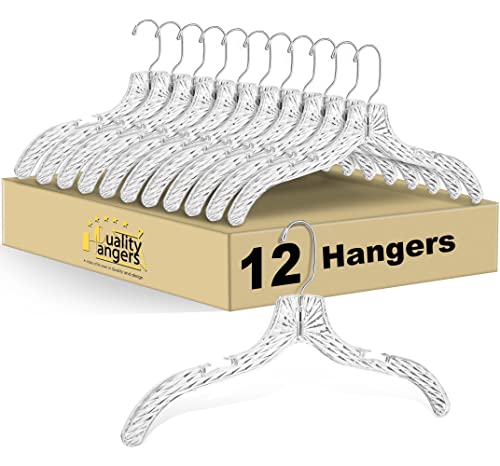
✅ GET A GREAT VALUE PLASTIC CLEAR HANGERS SET including 12 eye-catching crystal design hangers for organizing the coats, dresses, suits and shirts of men and women and the kids' jackets in the closet.

Hangers for keeping clothes cared for and organized; can hold multiple items and heavier pieces

INCLUDES: 30 suit clothes hangers in Gray/Silver for keeping shirts, blazers, slacks, and more neatly hung and organized
5. Scrap Metal Facilities

Wire hangers have one clear path at scrap metal facilities, but you have to bring them yourself. The catch is that most curbside programs reject them because the hooks tangle in sorting machinery, and even centers with the right equipment are scattered thin.
If you are holding a plastic hanger with a metal hook, someone has to remove that hook before the metal can go to scrap. The hook pops off with pliers, then the metal goes to the yard and the plastic body still heads to landfill. Most people skip this step, which means the whole piece gets tossed. The economics of paying facility rates to recycle a few grams of steel out of a free hanger rarely pencil out for a Saturday morning trip anyway.
Your cleaner’s wire hangers are the better candidate here; the dry cleaner pays for them by the thousand and already trucks them back.
6. Upcycling

I gave myself permission to overestimate how many wreaths I would ever actually make. The bag of broken plastic hangers in my basement proved it. Only keep the number you will use in the next year, because upcycling stops being virtuous the moment it turns into hoarding craft supplies.
Here is what actually gets made before the patience runs out:
- Wreath forms —Clip the hook off, tape two or three hangers into a circle with floral tape, and wind greenery or fabric scraps around the wire. The curve is already built in.
- Tomato and vine supports —Stretch the straightened wire into a U-shape, push the legs into soil, and let climbing plants grab the crossbar. One hanger per plant; the plastic coating keeps rust away for a season or two.
- Book-stack holders —Bend the bottom bar into a flat base and the hook into a back brace. It will not look store-bought, but it keeps paperbacks upright on a desk.
- Makeshift bag hooks —Twist the hook into a loop that screws into a cabinet underside or closet wall. The breaking point comes fast with anything heavier than a tote.
Plastic hangers stay useful when the project matches the material: thin wire, light loads, indoor use. Garden tasks wear them out by fall. Decorative crafts last until the tape frays.
7. Mail-In Recycling

TerraCycle runs a mail-in program with zero-waste boxes sized for hangers, which solves the problem of shaped plastic that most municipal plants reject. You buy the box, fill it, and ship it back; they handle the rest.
The hang-up is the price. These boxes run somewhere around $150–$200 each, depending on size, and a single box holds only so many hangers before you are paying to ship air. Hangers come free with every dry-cleaned shirt and off-the-rack jacket, which makes spending real money to dispose of them feel backwards. For a business with hundreds of broken hangers piling up, the math might soften. For one person cleaning out a closet, it is hard to justify.
I have thought about going in with neighbors to split a box, but coordination eats the savings fast. The program is real, it works, and the plastic actually gets recycled into something else. It is just not built for how most of us actually acquire these hangers: a few at a time, zero cost, zero urgency.
Recommended Products

Durable Metal Design: Our purse hook for car is made from sturdy metal, offering superior strength compared to plastic car accessories. This ensures it can handle heavier bags without bending or breaking, making it an essential car accessory for women and men alike.

𝗡𝗢𝗡 𝗙𝗟𝗢𝗖𝗞𝗘𝗗 𝗦𝗛𝗜𝗥𝗧/𝗖𝗢𝗔𝗧 𝗛𝗔𝗡𝗚𝗘𝗥𝗦 𝗛𝗘𝗔𝗩𝗬 𝗗𝗨𝗧𝗬- Crafted from high density ABS plastic, these non-flocked hangers feature a smooth surface and they don’t shed like the velvet ones so you’re not breathing anything bad into your lungs. Clothes slide on and off effortlessly to speed up your organizing routine. Though slim in shape, the sturdy build securely holds garments up to 11 lbs, so they stay reliable and won’t need frequent replacement

Space Saving Hanger Hooks:50pcs/box
What Hangers Are Made Of

Most recycling centers sort hangers by material first, and that sorting matters because each type faces a different wall. Plastic hangers are built from mixed, low-grade resin, usually polystyrene or polycarbonate combined with metal hooks and sometimes rubber grips. That mixture jams sorting equipment and contaminates entire batches that then go to landfill. Wire hangers carry a thin plastic or paper coating over steel, which scrap metal yards can process, though the coating burns off. Your curbside bin can’t take them, but a scrap yard will. Wooden hangers last longer in your closet, yet their varnishes, stains, and adhesives make them non-recyclable through any standard stream, and compost facilities reject them too.
| Material | Curbside recyclable? | Specialty option | Main barrier |
|---|---|---|---|
| Plastic | No | Some retail take-back programs | Mixed materials, low-quality resin |
| Wire | No | Scrap metal yard | Coating must burn off |
| Wood | No | None standard | Finishes and glues |
| Fabric/velvet | No | None standard | Mixed materials |
How Long Hangers Last in Landfills

85 percent of textile waste in the United States heads to landfills, hangers included. Plastic hangers can take hundreds of years to break down, leaching microplastics into soil and water as they sit. With roughly 34 billion produced each year, that slow decay turns a closet clear-out into a problem measured in centuries.
Wood hangers carry their own baggage: coatings and treatments that block composting, so they pile up too. The sheer scale is what changed how I think about a single broken hanger. One snapped hook seems small until you picture billions of them sharing that same slow timeline, still intact when the clothes they held are long gone.
Preparing Hangers for Any Destination

Plastic hangers collect dust and lint faster than you’d think, so start by wiping them down with a damp rag and letting them dry fully. A hanger that looks clean still carries skin oils and deodorant residue from the last shirt it held, and donation centers will turn away anything that smells like a thrift store before it even gets there.
Remove every paper tag, size sticker, and dry-cleaning label. Those adhesives gum up sorting machines and can contaminate a whole batch of plastic. While you are at it, pull off any foam shoulder pads or fabric grips, those are mixed materials that no recycler wants.
Sort by material next, not by where you think they are going. Group bare plastic together, wire together, wood together. A single wire hanger mixed into a plastic load can tangle in a baler or jam a donation bin’s sorting line. The ReCollective and most secondary programs reject mixed loads on sight, so ten minutes at your kitchen table saves a wasted trip.
Recommended Products

Over door metal hook with plastic (rubber) coating, hook length 5.5", fits most interior doors thin (0.5") to thick (1 3/8") with fixed 1 3/8" opening (non-adjustable) -...
Checking What Your Local Program Actually Takes

Plastic hangers sit in a frustrating gap in most recycling systems. Municipal programs differ so widely that what works in one county is actively rejected in the next, and the shape of the hanger itself, that hook and mixed materials, jams sorting machinery or contaminates entire batches. Before anything else, check the search tool on your city or county waste page. Most municipal websites run a what-goes-where database now, and “plastic hangers” typed into that field will tell you whether curbside is an option or a mistake. If the tool says no, note that dry cleaners, some big-box retailers, and regional recycling centers are the remaining paths, but each of those doors opens or closes by zip code too. I have searched four of these databases in the last year alone, and three of them buried the hanger entry under “miscellaneous plastics” or required knowing the resin number first. The five minutes it takes to verify beats the alternative, a whole truckload diverted to landfill because one item broke the rules.
Frequently Asked Questions
Are plastic hangers recyclable?
No. Most curbside programs reject plastic hangers because the metal hook embedded in the plastic body jams sorting machinery and the low-grade, often unlabeled plastic blends carry no resale value worth extracting. Roughly 85% of hangers bought each year, about 34 billion, end up in landfills because community recycling programs explicitly exclude them.
What can I do with old hangers?
Return them to dry cleaners, donate straight intact ones to thrift stores or shelters, drop wire hangers at scrap metal yards, or repurpose them for light home projects. Dry cleaners usually take both wire and plastic hangers back for reuse at no charge. Donation centers want hangers that are clean, uncracked, and sorted by type so staff can actually put them out.
Can wire hangers be recycled?
Yes, as scrap metal, but not through curbside bins. The thin steel tangles in sorting machinery and breaks equipment, so municipal trucks leave them behind. Scrap metal yards will process them, though the plastic or paper coating burns off during melting. Dry cleaners also take wire hangers back because they already pay for them by the thousand and truck them in bulk.
Where can I recycle hangers?
Check four places in this order: your dry cleaner, local donation centers, specialty recycling centers that handle rigid or industrial plastics, and scrap metal yards for wire hangers only. Call specialty centers ahead, their capabilities vary enormously by location and a website listing "industrial plastics" may stop at buckets, not hangers. Your city or county waste page search tool should be the first stop to confirm what your specific program takes.