The useful things to do with wire hangers range from two-minute fixes to full-season garden projects, and the one question that sorts them is whether your hanger is plain steel or coated. Coated hangers melt near heat and can flake into food; plain wire is the only kind that belongs near a flame or pushed through a drain. That distinction matters because roughly eighteen inches of straightened steel will unclog a sink, roast a marshmallow, or trellis a tomato depending on what hook you bend at the end.
1. Unclogging Drains

A straightened wire hanger can pull up the hair and soap scum that slows your bathroom sink or shower drain. Leave the last inch bent into a small hook so it catches rather than pushes the clump past the trap. Work it gently; the wire is softer than a plumber’s snake and will bend if you force it against the elbow joint. This is a hold-the-line fix, not a deep clean. A real snake or a pro will clear the pipe properly, but for hair collected near the stopper, the hanger buys you running water without the service call. Rinse the hook off in a bucket, not back into the sink, or you’ll be starting over in a week.
Recommended Products
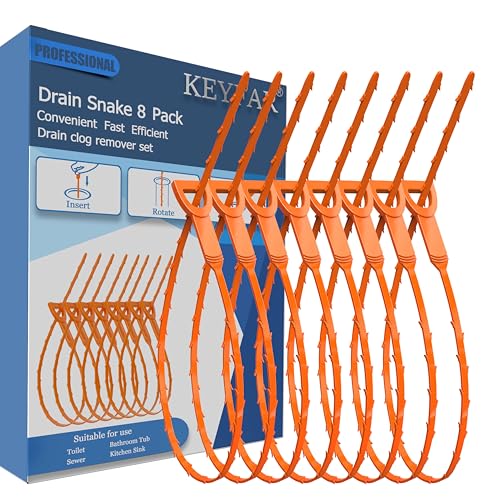
8-PACK FOR 8X THE VALUE – Stop reusing dirty, bent snakes. With 8 tools in every order, you always have a fresh one ready for every sink, shower, and tub in your home. Keep one in each bathroom – no more running back and forth.

Package Includes: Each ARCTIC EAGLE set includes 3 pieces of 20" drain clog remover cleaning tools. The width of the hair cleaner is 0.45", please make sure your sink hole is larger than 0.5" before purchasing

Reusable Drain Snake: Features a 270-bristle brush head that efficiently grabs hair, lint, and soap scum without slipping off. Pull out clogs in seconds to restore smooth drainage, then remove the debris and rinse clean this sink snake for reuse
2. Roasting Marshmallows and Kabobs

A straightened wire hanger beats most store-bought roasting sticks for one reason: the hook. Grab the straight neck with pliers and twist a tight loop, about two inches across, for a handle that stays cool and keeps fingers clear of the flame. The long reach matters more than I expected; a standard hanger gives you roughly eighteen inches of working length once the kinks are worked flat.
Only plain wire hangers belong near a fire. The vinyl-coated ones look similar but will melt and release chemicals you do not want touching food or inhaling. Check for any coating by scraping lightly with a thumbnail; bare metal should show immediately. The straight wire also lets you double two hangers together for heavier kabobs, twisting the shafts around each other from loop to tip so nothing sags over the coals.
Recommended Products

Mr. Pen wire hangers come in a set of 20, featuring an elegant silver finish that adds sophistication and style to your closet organization, perfect for those who appreciate both aesthetics and functionality in their wardrobe accessories.
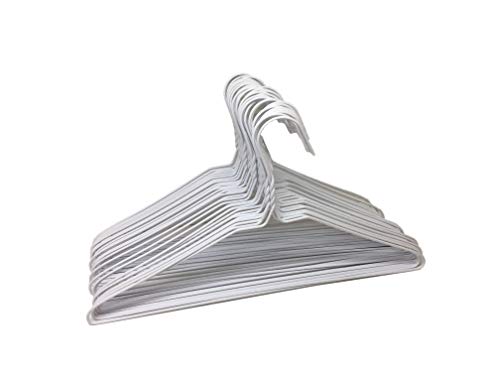

★Durable Coat Hangers: Crafted from high-quality stainless steel, each hanger weighs 0.145 pounds. Stainless steel has a higher density, making it heavier than other materials like plastic. Despite the extra weight, stainless steel hangers offer benefits such as better durability, resistance to deformation and rust, and strong load-bearing capacity, which help maintain clothes well.
3. Running Cable Behind Walls

A straightened wire hanger beats any overpriced fish tape when you need to pull low-voltage cable through a wall cavity. I bend a small loop or hook at one end, tape the speaker wire or HDMI to it, and feed the stiff length through the gap between studs. The wire gives you enough reach to cross a standard 16-inch bay and feel around corners without losing shape, and when the loop catches or the tape gives, you know right away instead of guessing whether your cable dropped into the insulation somewhere. For short runs between a media console and a wall-mounted screen, one hanger handles the full span; longer pulls, the hanger still works to guide the first length so the rest follows. Stick to low-voltage lines here: the hanger conducts and the insulation is thin, so anything carrying wall current needs proper tools and a licensed hand.
Recommended Products

Having Fun: It's a fun way to prepare delicious snacks using BBQStyle marshmallow campfire roasting sticks. The set features 5 stronger sticks for fire pit. You can use them to roast s mores, marshmallows, sausages, hotdogs, wieners, and smore sticks. There are 5 bright and lively colored style marshmallow roasting sticks. The color ends of the handles make each one easy to identify as "Mine". Everyone can find one they like.

BUILT TO LAST! Highest quality power welded forks use non-toxic 18/8 304 stainless steel to ensure easy cleaning, no rusting and safe roasting. Smooth finished wooden handles ensure a steady grip and no more hot handles.

Compact Design Hot Dog Roasting Stick for Fire Pit: The 32-inch extendable smores skewers for marshmallow convenient design gives optimum control for roasting sausages, wieners, hot dogs and vegetables. This marshmellow sticks camping smore kit for fire pit has extendable roasting sticks for campfire which are easy to hold and cook food. CORQUE telescoping marshmallow sticks are easy to carry and best for backyard, outdoors, and serve as a handy fork for camping needs.
4. Fishing Out Lost Items

The straightened wire with a small hook bent at the end slips into gaps where a hand will not fit and, more importantly, grabs without shoving the lost item farther out of reach. A hook curled back toward itself, not a straight pry, catches the loop of a key ring or the edge of a phone case so you can draw it up smoothly.
Behind the refrigerator, down the floor vent, under the dresser, or wedged between car seats, this shape works because it hooks rather than prods. The hanger keeps its length and enough stiffness to push past dust bunnies and grunge, but the business end stays small enough not to bulldoze what you are after. I have fished out an earring from a bathroom vent and a toddler’s spoon from beneath a stove with the same bent hanger; the difference was mostly the angle of the hook.
Recommended Products

Efficient Wire Pulling: This flexible drill bit features a fish eye hole near the tip, with a 3/4-inch head diameter and a 54-inch overall length, allowing easy wire insertion through walls and cavities without causing extra damage.

DESIGNED BY PROFESSIONALS, FOR PROFESSIONALS Easily install low-voltage & network cables over long distances & 90-degree corners without kinks & snags with our Professional Cable Pulley, made with tough ABS plastic, smooth roller bearings & easy-remove, Extruded 6063-T3 Anodized Aluminum brackets!
Fish Near Steel Studs
5. Trellising Plants

Weak-stemmed plants like tomatoes need support, and a wire hanger cage handles the job for the cost of a drawer cleanup. Straighten four to six hangers and bend one end of each into a U-shaped ground spike, maybe four or five inches, that you can push into the soil. Stick them around your tomato in a circle, then weave one or two more straightened pieces horizontally through the verticals, twisting the intersections to lock them. The crosshatch gives you the stability a single stake never manages.
This works best in containers or small plots, where a full-size tomato cage looks like overkill and store-bought stakes wander after the first wind. In a 5-gallon bucket, three hangers set in a triangle with one cross piece near the top and another at mid-height is usually enough to keep a determinate variety upright through August. The wire is thin enough that you can bend it by hand, thick enough that it will not sag under a loaded plant, and if you are starting from dry cleaners’ hangers, the supply is basically free.
Recommended Products

High-quality material: Our tomato twist stake trellis is made of high-quality steel wire with coating on the surface, smooth to the touch, and not easy to rust after long-term use. Sturdy steel wire is not easy to break and bend, enough to provide stable support for plants

175 Feet. 20 Gauge galvanzied

【Pack of 20】: The tomato hooks can be used alone or with truss brackets, place the tomato hook at the suitable place on the vegetable, vertical drop the rope, the vine will grow around the rope.
6. Cleaning Candle Holders

The pointed end of a straightened wire hanger works better than a butter knife for chipping cooled wax out of candle holders. I snip the hooked top off with heavy-duty kitchen shears, then flatten the curve with pliers so I have a straight piece with a sharp cut end. The cut wire bites into wax without scratching glass the way a metal blade can, and it’s thin enough to scrape the narrow wells where votives sit or the ringed bases where tapers leave their pools.
Metal holders are more forgiving, but even on delicate glass I can angle the hanger to lift wax in flakes rather than gouging. The technique is simple: work from the edge of the wax toward the center, let the pieces fall onto newspaper, and wipe the last residue with a warm rag. I keep two of these tools in my junk drawer now, one with a slightly longer reach for hurricanes and tall jars. It costs nothing and takes about two minutes to make, which is faster than driving to buy a specialty scraper you’ll use twice a year.
Recommended Products

50" Extra-Long & Ultra-Thin Design: Reaches deep into drains to clear stubborn blockages in hard-to-reach areas. At just 0.11 inches thin, this ultra-slim snake drain hair removal tool slides effortlessly through narrow drain openings and curved pipe traps without getting stuck

POWERFUL HAIR CLOG REMOVAL: The snake drain hair removal tool features patented micro-hook technology that grabs and removes hair, grime and debris fast without tools or harsh chemicals.

【Soft & Flexible Barbed Wand】This 4-pack 20inch drain clog remover features a multi-tooth design, making it perfect for navigating various strainers and pipes to easily hook and remove hair and debris.
7. Unlocking Older Car Doors

A straightened wire hanger with a small hook bent into its last six inches can still open pre-2000s car doors. You feed it between the window glass and the weatherstripping, feel for the vertical lock button on the inside panel, and pull upward until the mechanism releases. This only works on older cars with manual locks and looser window seals. Modern vehicles with electronic locking systems and tighter tolerances have eliminated the gap this trick needs, so calling roadside assistance is the safer bet on anything newer than the late nineties.
Recommended Products

★SOLID STAINLESS STEEL: Made from rust- and moisture-proof 3.2 mm steel that won't bend, rust or snap like cheap wire or plastic hangers.
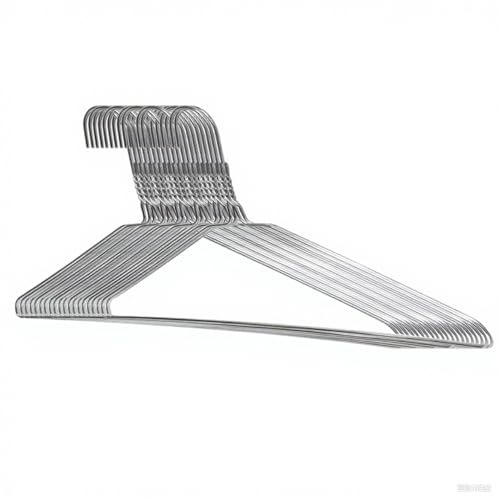
Galvanized wire hangers 20Pac

SOLID STAINLESS STEEL: Made from rust- and moisture-proof 3.2 mm steel that won't bend, rust or snap like cheap wire or plastic hangers.
8. Making Wreath Frames

Bend a wire hanger into a circle and you have a frame that outlasts any cardboard base. Untwist the neck with pliers, reshape the body into a loop, then retwist to close. The steel holds its shape against heavy greenery, pinecones, or clustered ornaments that would split grapevine or sag paper forms.
Last year I tried this after a cardboard wreath collapsed under wet cedar. The hanger frame stayed true through two months of rain and a forced-air vent blowing directly on it. You can mix sizes by using adult hangers for the main form and children’s hangers for accent rings or swags nested inside.
The retwisted closure is the weak point, so overlap the ends by an inch rather than meeting them tip to tip. Wrap that joint with floral tape before you add materials, or the bare wire will work through your greenery and snag.
Recommended Products

HIGH QUALITY AND SAFETY: Our smores kit for fire pit made of premium food-grad stainless steel and a heat-resistant finely polished wood handle, built to last, safe roasting, reusable, have a telescopic design. Extended length: 32 inch/81.3 cm, retracted length: 12 inch/30.5 cm, fork length: 3.5 inch/9 cm, wooden handle Length: 4.5 inch/11.5 cm, keep your family and friends safe

BUILT TO LAST! Highest quality power welded forks use non-toxic 18/8 304 stainless steel to ensure easy cleaning, no rusting and safe roasting. Smooth finished wooden handles ensure a steady grip and no more hot handles.
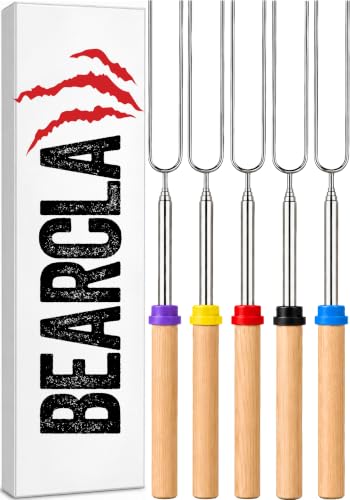
BUILT TO LAST! Highest quality power welded forks use non-toxic 18/8 304 stainless steel to ensure easy cleaning, no rusting and safe roasting. Smooth finished wooden handles ensure a steady grip and no more hot handles.
9. Re-stringing Drawstrings

A straightened wire hanger runs a drawstring through its channel faster than any bobby-pin hack I tried in college. Straighten the hanger fully, then bend a small hook into one end to catch the knotted string or keep it from snagging fabric. Thread the hanger through the waistband casing first; once the tip emerges at the other opening, attach the drawstring with a safety pin or a wrap of masking tape. Pull the hanger back through and the string follows in one motion.
This saves sweatpants, hoodies, and pajama bottoms that otherwise sit in the mending pile for months because the restringing feels like surgery. The hanger’s length keeps your hands outside the channel, which matters on a three-inch waistband tunnel where fingers lose grip in two inches. A two-inch loop at the hook end, not a closed circle, lets the string release cleanly without fighting through the final gap.
Recommended Products

Durable Spring Steel Construction:Steel Electrical Fish Tape Wire Puller designed for running wire through wall, conduit and tight spaces.Built from high-strength spring steel, It is 4 mm diameter delivers excellent rigidity and flexibility for wire runs. This wire snake features a smooth pulley head for easier cable routing, reduced friction and better control when fishing wire in home wiring, remodel or electrician jobs.

Efficient Wire Pulling: This flexible drill bit features a fish eye hole near the tip, with a 9/16-inch head diameter and a 54-inch overall length, allowing easy wire insertion through walls and cavities without causing extra damage.
SECURES bundles to WALLS, STUDS or OTHER SURFACES
10. Returning Hangers for Recycling

Most dry cleaners still take wire hangers back. The steel gets reused or melted down, which matters more than you might think: import tariffs drove hanger prices up a few years ago, and that cost gets passed back to customers. Walking in with a bundle of old ones is one of the few ways to cut the price of your next load without a coupon.
The process is built to be easy. A box sits right inside the door at plenty of shops, same spot as the bag recycling bin. Drop the hangers on your way to the counter. No explanation needed.
The trick is keeping them in rotation at all. A paper grocery bag of used wire lives in my trunk, tucked flat where the spare tire tools go. Every fourth or fifth visit, the bag goes home empty. The plastic bags go in the same box if the cleaner takes them, which most do.
Steel recycles clean. One bundle of twenty hangers is a small act, but it is the kind that actually closes a loop instead of opening a guilt one.
Recommended Products

HIGH QUALITY MATERIAL -The outer shell of our soft plant tie is made of high quality rubber TPR material which is not only perfect to protect the plant wire itself, but also will protect your plants and your fence. Soft, flexible and durable, also our YDSL plant ties are cuttable and reusable, will save your effort.

【Package includes】You will receive 20 pieces of tomato hooks with string and 100 pieces of plant support clips;.Tomato hooks are made of robust rope and iron materials,whichare weather-resistant,aging-resistant,high-temperature-resistant,rot-resistant, and not easy to break.

50 Hooks & 100 Support Clips: Package Includes 50 pieces tomato hooks with string and 100 pieces plant support clips, the garden clips has 1.2 inch / 3cm round hole that is convenient for better fixing vines and stems for climbing plants, each tomato holder hooks has 33.3ft / 10.15m white string.
What Coated Hangers Can and Cannot Do

Coated hangers hide a few hazards that plain wire does not. The plastic or vinyl coating on most modern hangers melts easily and can release fumes; plain wire only for any task involving heat. Older painted hangers carry a different risk, since pre-1978 paint may contain lead, and even newer vinyl coatings can off-gas when heated or scraped. Food contact is the clearest line to draw. A coated hanger bent into a roasting fork will shed chemicals directly onto marshmallows, kabobs, or hot dogs the moment flame nears. The same warning applies to any kitchen use at room temperature, since vinyl softens and paint flakes, neither of which belongs near anything you eat.
For the reuses that actually work well, stripping the coating first is more trouble than it is worth. A nicked coating leaves sharp edges and exposes uneven metal. Grabbing a bare wire hanger from the start saves the guesswork about what year it was painted or what compound the vinyl contains.
Why Dry Cleaners Want Hangers Back

Dry cleaners started asking for wire hangers back when import tariffs drove up the price a few years ago. The cost jump made new hangers expensive enough that returning them became a genuine budget move for the business, not just a feel-good recycling gesture. Most cleaners keep a box right inside the door, same way you’d drop off a bag of shirts, so there’s no extra trip involved. Plastic garment bags go in the same box if the cleaner takes them.
The DIY Mindset with Free Materials

Wire hangers accumulate faster than most people plan for. The dry cleaner hands back five shirts, and suddenly the closet holds another fistful of plain steel wire that sags under anything heavier than a summer blouse. I used to let them pile until they tangled into a bird’s nest of metal, then haul the whole mess to the bin.
The shift came when I stopped seeing them as failed hangers and started treating them as free structural wire. Unwind the twisted neck, straighten the kinks with pliers, and you have a 14-inch length of bendable steel that costs nothing and arrives pre-paid with your laundry. For small DIY projects that need a thin armature, a hook, or a loop pushed through a tight gap, that reclaimed hanger beats a trip to the hardware aisle.
The limit is the coating. Some dry cleaners use hangers with a thin plastic layer, and those must stay out of any project involving heat. Plain wire only for anything near a flame or barbecue coals. I keep the two kinds separate now, plastic-coated in one grocery bag for light household tasks, plain steel in another for anything that might end up near fire or in an oven.
Frequently Asked Questions
What can I do with wire hangers?
You can unclog drains, roast marshmallows and kabobs, run cable behind walls, fish out lost items, trellis plants, clean candle holders, unlock older car doors, make wreath frames, and re-string drawstrings. A straightened hanger gives you roughly eighteen inches of working length and enough stiffness for most small household tasks.
Can I use wire hangers for food?
Only plain wire hangers, never coated ones. Vinyl or plastic coatings melt near flame and release chemicals you do not want touching food or inhaling. Scrape lightly with a thumbnail to check; bare metal should show immediately.