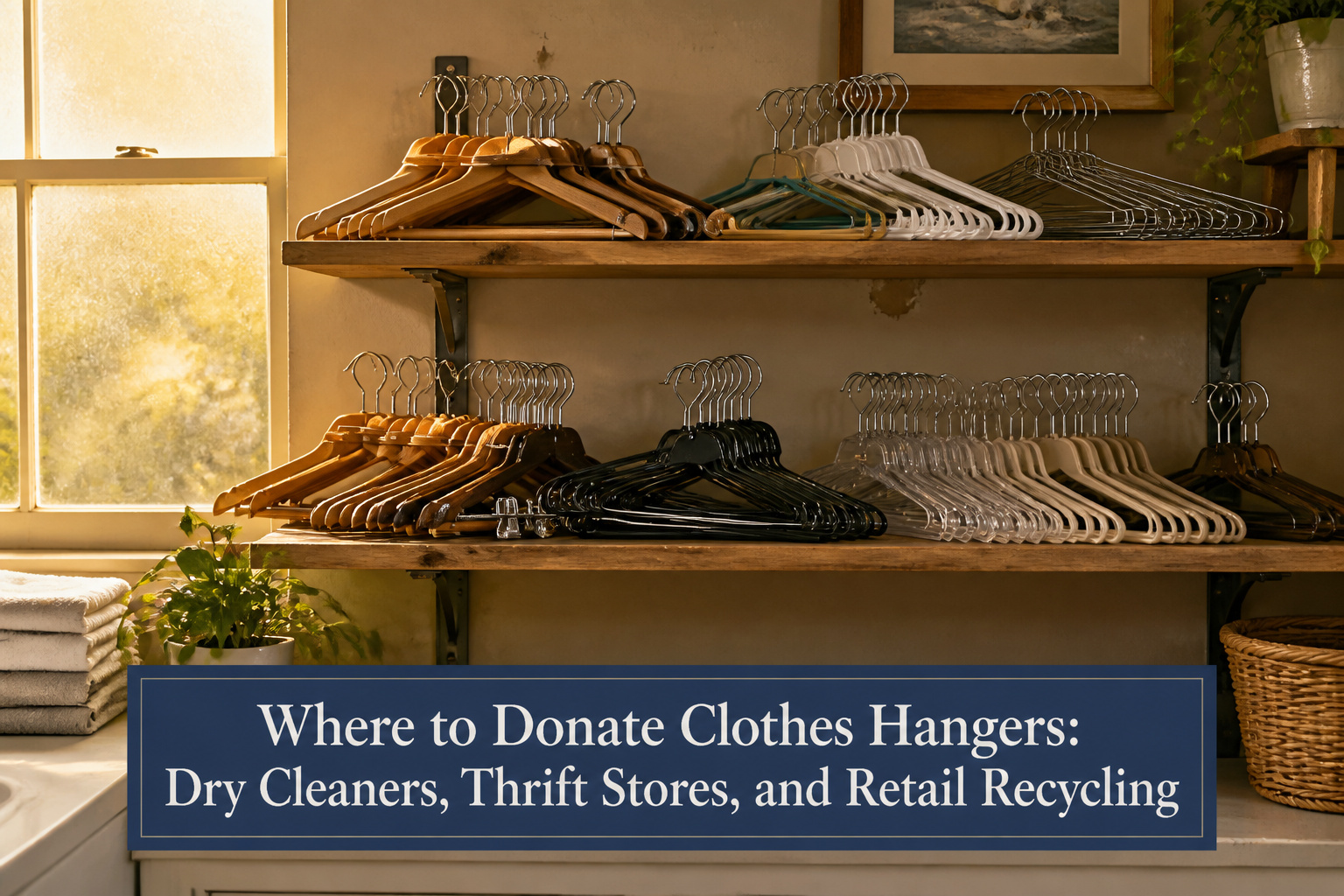
Clothes hangers are reusable items that most curbside recycling programs reject because their shape tangles machinery. The condition that changes where they go is the material: wire, wood, and plastic each need a different destination, and roughly 85% of hangers bought each year end up in landfills when that distinction gets ignored.
Dry Cleaners

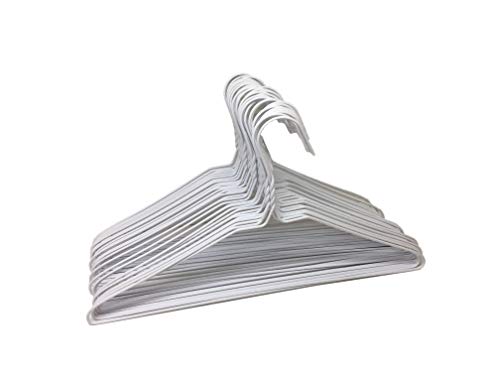
Wire hangers snap back into shape just enough times before the metal fatigues, and dry cleaners run through them faster than most people realize. That is why a local cleaner is often the most reliable place to donate wire hangers specifically, more so than thrift stores or municipal bins that sort by broader material type.
The condition bar is low but real. Straighten bent hooks, remove any paper or plastic from the dry cleaner’s last run, and bundle them loosely so the wires do not tangle into a single knotted mass. Rust spots need not disqualify a hanger unless they have weakened the steel enough that it crumples under a shirt’s weight.
Finding one that accepts them takes a phone call rather than a website check. Smaller operations especially, the kind that still do pressing in-house, will usually say yes because the hangers they dispense are the same ones they would otherwise buy new. Ask directly whether they want drop-offs during business hours or if the loading dock after closing works better. Grab a dry-cleaning bag while you are there; it keeps the bundle together and signals to whoever opens it what they are looking at.
Thrift Stores

Thrift stores look for hangers they can resell, and wooden hangers are the most likely to pass that test. The finish and weight signal quality to shoppers, so Goodwill and similar chains sometimes accept them as complete sets.
Plastic and wire hangers are a harder sell. Thin wire tangles on racks and in storage bins; plastic cracks under fluorescent lights and repeated handling. Most thrift operations would rather source hangers by the case from distributors than sort through bags of mismatched household castoffs.
The surest move is a phone call before you load the car. Ask whether they take hangers at all, and if so, whether they want them bundled by type or dropped loose. A five-minute call saves the twenty-minute drive home with a trunk still full of metal you now have to unload somewhere else.
Recommended Products

Suit clothes hanger for keeping personal and professional clothing neatly organized

Wooden Coat Hangers For Closet - These wooden hangers for clothes are made from solid wood to hold jackets, shirts, and suits without bending. Contoured shoulders distribute weight evenly to maintain shape and prevent shoulder marks or sagging, while a smooth finish protects fabrics from snags.

VERSATILE - With clear, varnished wood, a 360 degree chrome hook, grooved pant bar, and contoured shoulder line, these closet hangers have made even the most finicky clothing easy to hang up!
Retailers with In-Store Recycling

Big-box chains run in-store recycling bins that take plastic hangers with no purchase required, which makes them one of the easier stops on a Saturday errands loop. Target, Kohl’s, Walmart, and H&M all operate programs, though the details shift enough that a phone call saves a wasted trip.
H&M’s garment collection program accepts plastic hangers alongside clothing and textiles. Target runs a similar drop-off for plastic, while Kohl’s and Walmart handle theirs through broader store recycling streams. What actually happens after the drop-off is hard to trace, the brands don’t publish downstream partners the way a municipal program would. Some of those hangers likely feed into the commercial reverse logistics loop where sorting facilities clean, repackage, and resell them back to garment vendors at discounted rates. Others may not.
Plastic hangers travel easiest through these programs. Wire ones tend to tangle in store balers, so most locations quietly refuse them even if the posted rules don’t say so outright. And programs do pause, a bin that was there in March can vanish by June without signage explaining why. Asking at customer service isn’t just confirmation; it registers demand that keeps the program alive.
Recommended Products

Eco Friendly: Made from 100% recycled post consumer plastic (e.g bottles, caps, cups, labels, etc)
Mail-In Specialty Programs

TerraCycle runs a mail-in program for hangers that most people in rural areas or towns without scrap yards never hear about. You buy a box, fill it with wire, plastic, or wood hangers, and ship it back once full. A single box handles roughly a few dozen hangers and costs noticeably more than free drop-off would, so this only makes sense when the nearest metal recycler is a half-day drive or your curbside program rejects hangers outright.
The program accepts all three common types, though wire hangers ship most efficiently because they nest flat. Plastic hangers with clips or bulky shapes eat box space fast. I considered ordering a box last spring after our local scrap yard stopped taking household metal, then did the math: two boxes would have cost about what I spent on a basic closet system that year. For someone with twenty hangers and no car, the price stings. For a household clearing out three closets after a move, spreading the cost across every hanger makes it palatable.
Timing matters, too. These boxes sit until full, and most people lack the storage to let hangers pile up for months. If your town has a dry cleaner or thrift store that reuses them, that route wins. Mail-in becomes the practical fallback when you have checked every local option and still have a bundle left.
Recommended Products

Multiple Quantity: the dry cleaner hangers come in a box of 30 pieces; a sufficient quantity can satisfy your daily use and replacement needs. Note: Paper pipe part – keep dry, for dry cleaners/wardrobes
Community Organizations and Shelters

A bag of hangers dropped off at a shelter can vanish in an afternoon. Emergency housing moves fast. A family arrives with clothes in garbage bags and needs to hang them before a job interview the next morning. Plastic and wood hangers in good condition go straight into shared closets; wire hangers usually do not, since they tangle and rust in high-turnover laundry rooms.
The best match tends to be family shelters, women’s shelters, and transitional housing programs. They keep communal clothing banks where hangers are always short. Daycare centers and schools with uniform swap programs also take them, though this varies by district.
Finding one nearby works the same way as any donation. Call the intake desk and ask whether they accept hangers and which material. Some keep a wish list online. Condition matters more here than at thrift stores. Shelters pass hangers directly to residents, so bent wire, cracked plastic, or missing pant bars become someone else’s problem. I sort out any that snag fabric or wobble on a rod before I bag them.
If the first shelter says no, the second often says yes. It is worth two calls.
Recommended Products

【6-Pack Garment Bags】 Measuring 40" x 24" x 10", each clear garment bag provides ample space to hold up to 10 sweaters, 8 coats, or 10 dresses. With a total storage capacity for 50+ clothing items, this set is perfect for organizing suits, shirts, dresses, sweaters, jackets, and winter clothing, keeping your closet tidy!

4 pack with 10” gusseted: Each hanging garment bag can hold 10 suit or 8 winter fur coats without wrinkles. 40 inch length is perfect for storing shirts, jackets, Trench coat and short skirt, etc
Scrap Metal Yards

Steel wire hangers are thin enough to tangle in recycling machinery, which is why most curbside programs reject them. Scrap metal yards do not have that problem. They accept bundled wire hangers for the steel content, though the payout is minimal for a household quantity. Expect pennies per pound, if anything, since steel is common and these hangers are light.
Before dropping them off, bunch the hangers tightly with a rubber band or a length of wire to prevent tangling. Any paper or cardboard dry-cleaning slips still on the hooks will burn off in the smelting process, but pulling them free keeps the bundle neater and the yard staff happier. Plastic coating or non-steel parts are a different matter; those need removal or the yard may refuse the load.
If you are already making a trip for old shelving brackets or a bent curtain rod, wire hangers ride along easily. They are not worth a dedicated drive unless you have dozens stacked up from years of dry cleaning.
Recommended Products
Free Listings and Local Groups

Free listings on Facebook Marketplace and local neighborhood groups work best when you have a large batch to move at once or a specialty type worth the trip. I learned this the hard way after posting a bag of twenty mixed wire and plastic hangers that sat for two weeks with no takers, then watched a neighbor’s listing of sixty matching wood hangers disappear in three hours.
The difference is the photo and the count. A clear shot of all hangers laid out so the type is visible, with an exact number in the headline, tells people whether the drive is worth their fuel. Specialty hangers, the kind from Macy’s or Nordstrom that came with a suit or coat purchase, do even better named specifically; someone searching for matched sets for their own closet will spot the brand in the listing.
The cost is only your time to stage and meet, and the limit is geography. These groups fail for odd lots of five or ten mismatched pieces that no one wants to collect. Bundle those with something else or take them to a dry cleaner instead.
Recommended Products

Suit clothes hanger for keeping personal and professional clothing neatly organized

Wooden Coat Hangers For Closet - These wooden hangers for clothes are made from solid wood to hold jackets, shirts, and suits without bending. Contoured shoulders distribute weight evenly to maintain shape and prevent shoulder marks or sagging, while a smooth finish protects fabrics from snags.

【MEASUREMENTS】17.5"W X 9"H X 0.47"T. Flat body. Pack of 30pcs. Each hanger maximizes your closet's storage space. Perfect for tank top, suit, jeans, coat and dress.
Why Curbside Bins Reject Hangers

The first time I tossed a batch of plastic hangers into my blue bin, I figured the recycling symbol on the base meant they belonged there. A few weeks later, sorting through what actually happens at the curb made me understand why most curbside programs reject hangers outright.
The problem starts with shape, not substance. Hangers tangle in the automated machinery that separates recyclables, wrapping around rotating disks and conveyor belts like a mess of fishing line. Workers have to shut the line down to cut them free. Wire hooks poke through sorting screens. The mixed construction, plastic or wood with metal hooks and sometimes rubber grips, means a single hanger crosses multiple material categories, and standard facilities do not break them apart.
Plastic hangers themselves are usually polystyrene (#6) or polycarbonate, plastics that technically can be recycled. Attach a metal hook, though, and the batch becomes contamination. Facilities overloaded with non-recyclable items often landfill the whole load rather than sort out the problem pieces. The wishcycling impulse, that relief of getting something "out of the house and into the system," backfires when the system is built for bottles, cans, and paper, not awkward forms that jam equipment and raise operating costs for everyone.
Recommended Products

Eco Friendly: Made from 100% recycled post consumer plastic (e.g bottles, caps, cups, labels, etc)
What 85% of Hangers Face in Landfills

Plastic hangers spend centuries sitting in landfill after a single use. Some estimates say more than a thousand years for them to decay, leaching chemicals into the soil the whole time. Wire hangers last just as long in practice, since most municipal programs refuse them in curbside bins. Wood fares better if untreated, but lacquered or painted versions face the same landfill fate. Roughly 85% of hangers bought each year end up in landfills. That number, close to 34 billion individual hangers, is what pushed me past the "just toss them" habit. The shape and mixed materials of a typical hanger make them incompatible with standard recycling machinery, so once they leave your closet, the trash is the default path unless someone else can use them first. Donating or finding a reuse program is not a nice extra step; for most hangers, it is the only way to keep them out of that 85%.
Preparing Hangers for Donation

A bent wire hanger catches on the shoulder seam every single time, so the sorting step matters more than most people think. I run through ours before any donation drop:
- Peel off every sticker or size tag, especially the ones dry cleaners press on. Adhesive softens in a warehouse and gums up the next person’s garments.
- Lay each hanger on a flat surface and look for wire crimps, cracks in the shoulder curve, or splinters catching on a fingertip. A wooden hanger with a rough split belongs in the wood scrap pile, not the donation bin. Plastic hangers with stress whitening at the hook are about to snap; set those aside.
- Match sets by type and material. A thrift store can move twelve wire hangers in a bundle, but a random singleton gets tossed.
- The line I draw: if you have to explain what is wrong with it, the hanger is too damaged to pass on. Broken wire, missing clips on a pants hanger, or a hook that no longer swivels smoothly are recycling, not donation, conditions. Metal goes to scrap; unusable plastic hangers go to retail recycling programs that shred them into other products.
Recommended Products
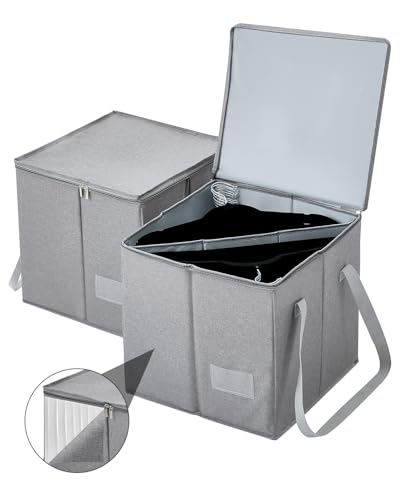
STURDY & LARGE CAPACITY: Our hanger storage organizer box is made of high-quality fabrics and sturdy support boards, perfect for long-term storage. The size of this hangers organizer stand is 37x37x35.5cm/14.6x14.6x14in, it can hold more than 100 thin velvet hangers, making it perfect for organizing your extra hangers and keeping your wardrobe organized.
Wood, Wire, or Plastic

Wire hangers go back to the dry cleaner or to a scrap yard. Wood hangers with a natural finish can land at a thrift store, but once stains or varnish have been applied, the treatment contaminates the wood and rules out recycling entirely. Plastic hangers are the trickiest: curbside programs almost always reject them, so retailers with take-back programs or a TerraCycle mail-in box become the practical paths. Mixed-material hangers, the kind with metal hooks embedded in plastic or coated wire wrapped inpaper, complicate every stream because the components have to be separated before any facility will handle them.
| Material | Best Destination | What Complicates It |
|---|---|---|
| Wire (steel) | Dry cleaners; scrap metal recyclers | Thin profile tangles machinery, so curbside is out |
| Wood (untreated) | Thrift stores; shelters | Stains, varnishes, and other finishes contaminate the wood |
| Plastic | Retail recycling programs; TerraCycle | Breakage and mixed hooks make local programs scarce |
| Mixed or coated | TerraCycle; trash as last resort | Bonded materials need separation most facilities cannot perform |
I used to bundle wire hangers by the dozen and walk them back to the same dry cleaner who supplied them; most were glad to take them. For plastic, I have learned to call the local store first, since retail programs pause or vary by location, and a wasted trip burns the weekend afternoon this audience does not have.
Frequently Asked Questions
Where can I donate clothing hangers?
Dry cleaners, thrift stores, community shelters, and retailers with in-store recycling bins all accept hangers depending on the material. Wire hangers go back to dry cleaners most reliably; thrift stores prefer wooden sets in good condition; plastic hangers drop off at Target, Kohl’s, Walmart, or H&M. Call ahead to confirm what each location takes.
Can I recycle plastic hangers?
Most curbside recycling programs reject plastic hangers outright because their shape tangles in sorting machinery and the mixed metal hooks contaminate plastic batches. Retail take-back programs at Target, Kohl’s, Walmart, and H&M accept them, or you can mail them to TerraCycle. The recycling symbol on the base does not mean your blue bin will take them.
Are wire hangers recyclable?
Wire hangers are recyclable as scrap metal but never in curbside bins. Dry cleaners almost always accept returns, and scrap metal yards will buy bundled wire for pennies per pound. Straighten the hooks and bundle them tightly so they do not tangle before you drop them off.
What should I do with broken hangers?
Broken hangers belong in specialized recycling or the trash, not donation bins. Bent wire goes to scrap metal yards; cracked plastic with stress whitening goes to retail recycling programs that shred them into other products; splintered wood goes to wood scrap. If you have to explain what is wrong with it, the hanger is too damaged to pass on.