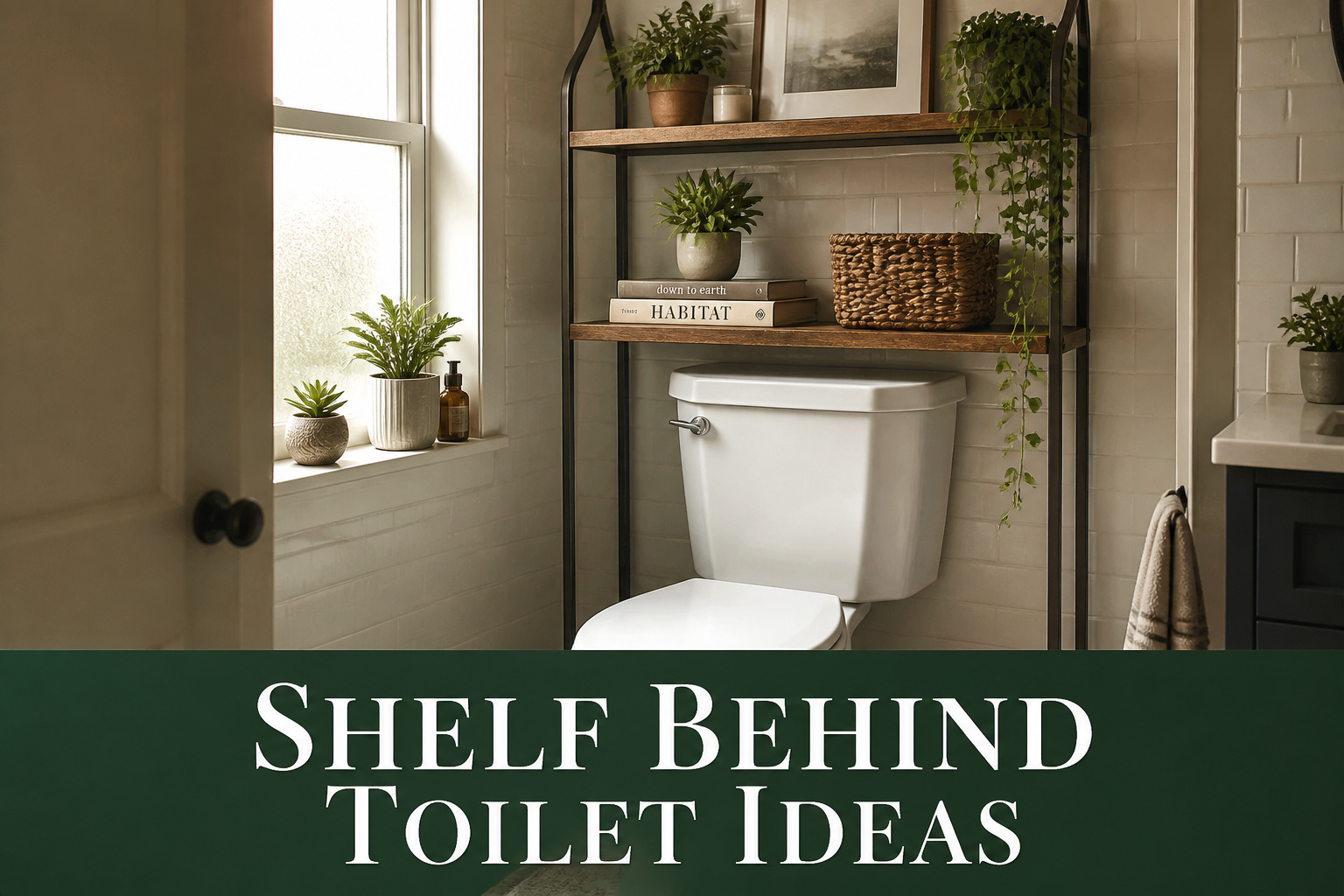
The shelf behind your toilet can cost twelve dollars or demand a full gut renovation, and the single question that splits those paths is whether you own the wall or merely rent it. Renters lean toward freestanding bamboo units that straddle the tank at 60–66 inches, while owners with open studs can recess a niche that reads as original architecture. The catch is humidity: steam rises straight into that shelf, turning unsealed rattan gray in two years and peeling adhesive strips loose in three mornings.
1. Floating Shelves for a Modern Look

Wall-mounted floating shelves keep lines clean because the bracket hides inside the shelf itself. In a bathroom that already feels tight, that hidden hardware matters: you see the material, not the mechanism, and the wall stays uncluttered. Wood, metal, or painted MDF each read differently, but the bracket system is what actually carries the load, so check the weight rating before you load one with glass bottles or stacked towels.
Plan for 10–12 inches of clearance above the tank lid. That gap lets you lift the tank cover for maintenance without knocking whatever sits on the shelf, and it keeps the toilet from feeling crammed underneath. Set the shelf itself at eye level when you’re standing, which puts displayed items where a guest actually looks; too high and the shelf becomes dead storage, too low and it crowds the bowl.
Glass or stainless steel floats the lightest visually, which helps a small bathroom feel open. A single short glass shelf holds the essentials, a wood ledge warms the space, and painted MDF keeps the cost down for a weekend project that might not survive your next lease. One shelf works, two staggered ones give you a tiered display, and three only if you have the wall height to keep them from reading as clutter. The trick is curating what sits there, functional or decorative, so it does not melt into messy.
Recommended Products

Use Every Bit of Wall Space - Installing white and gold floating shelves (Size: 17"L x 6"D x 2.2"H) set of 3 can help you add both storage and style to your bathroom, bedroom, closet, nursery etc., and they don’t need to take up a single square foot. Forbena Floating shelves bathroom can hold everything from daily essentials like skincare serums and washcloths to decorative items like indoor plants, fresh flowers or framed artwork.

Multi-functional Design: This shelf consists of a towel rack and three laminated panels. You can use a towel rack to hang your towels, which will dry them faster. And the laminate can hold the bottles and cans
2. Over-the-Toilet Shelving Units

Freestanding over-the-toilet shelving units straddle the tank without touching tile, which matters more than people think until they face a bathroom wall backed by concrete. The three-tier bamboo organizers that keep showing up in searches hit typical heights around 60–66 inches, enough to clear most standard tanks while keeping the top shelf within actual reach. I keep seeing renters lean toward these because the alternative is drilling through glazed porcelain or finding a stud in a wall that might hold nothing but dust.
The stability question is real. A freestanding unit with a full basket on the top tier can shift when you bump it reaching for the faucet. Wall-mounted shelves solve that but need anchors, a level, and a landlord who does not inspect the grout. Storage volume actually favors the freestanding designs in most cases: the footprint gives you depth, not just width, and the cheapest wall-mounted ledges run 6–8 inches deep before things start looking precarious.
Bamboo brings that Japandi texture in without a separate décor purchase, though wicker baskets on the shelves finish the look better than leaving toiletries exposed. The trick is weight distribution: spare towels low, lighter items high, and nothing heavy enough to tip the whole unit if a kid pulls on it. A $76 ladder-style bamboo shelf from the same aesthetic family can lean instead of straddle, but the straddlers use the tank itself as a back brace, which solves the topple problem the ladder never quite loses.
Recommended Products

【Over Toilet Storage】The bottom shelf can easily fits into space behind your toilet. Featuring three mesh shelves, it provides ample storage for bathroom accessories, shampoo, shower gels, towels, and hair dryers. Keep daily necessities organized and easily accessible.

【NO DRILLING, NO DAMAGE】 Perfect for bathrooms and rental apartments, this over the toilet shelves cabinet requires no drilling or wall damage. The sleek black design complements any home décor while the compact footprint maximizes storage in small spaces throughout your home

Large Capacity Cabinet: Our Over The Toilet Storage features a spacious cabinet that can accommodate items of various sizes. You can store towels, paper products, cleaning supplies, and other bathroom essentials, keeping them within easy reach while maintaining a tidy and organized bathroom. The cabinet's interior shelves are adjustable to accommodate items of different heights and sizes. The unique barn door design adds style and functionality to the storage unit
3. Built-In Shelves and Niches

Recessed wall niches are the one behind-toilet storage choice that reads as architecture instead of furniture. They sit flush with the drywall, framed out in the same trim as the rest of the room, and they convert the awkward gap above the tank into something that was always meant to be there. New builds and gut renovations are the obvious fit, since the wall cavity is already open, but they also work well above a half-wall or pony wall where the structure gives you depth without stealing floor space.
The waterproofing is where people cut corners and regret it. A niche inside a shower zone needs the same membrane and tile backing as the surround, but even a niche above the toilet should get sealed edges and a moisture-rated backer if the bathroom runs humid. Skip that step and the drywall corners soften over a few seasons.
What convinced me, looking at how these projects come in on budget, is that the material cost is minor during a remodel but looks disproportionately expensive after the fact. A carpenter is already in the wall, the trim carpenter is already on site. Adding a framed box sixteen inches wide costs little more than the labor you are already paying for, yet the result feels finished in a way that a $200 shelf never quite does.
Recommended Products

Space saving: Our over-the-toilet storage shelf has 2 tiers and ultra-large capacity, allowing you to make the most of your bathroom space. Each layer bears 25 lbs.
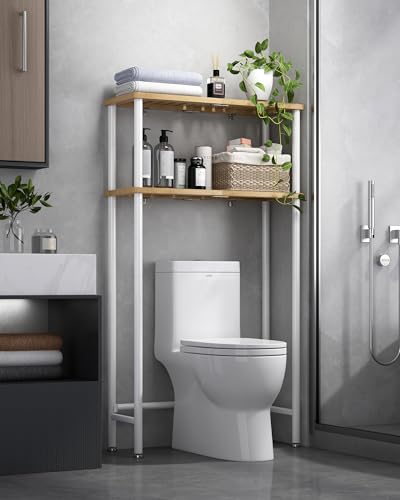
Maximize Over-Toilet Space: This over toilet bathroom organizer turns unused space above your toilet into practical bathroom storage. The toilet shelf fits most standard toilets and is ideal for small bathrooms, apartments, dorms, and laundry rooms. Overall size: 25.2" W x 9.8" D x 56.6" H. Please measure your toilet height and width before purchase.

【Sustainable Bamboo】Sturdy, durable bamboo construction with smooth finish, built for long-term daily use
4. Medicine Cabinets for Concealed Storage

Surface-mounted and recessed medicine cabinets fit that awkward wall behind a toilet better than most people expect, as long as you remember the 4- to 5-inch depth limit most models carry. Anything deeper and the door arc grazes your forehead.
A mirrored front doubles the utility. The mirror catches what little light a small bathroom gets, bounces it back toward the vanity, and saves you from mounting a second fixture lower on the wall. Pharmacy-style cabinets with their cross-grille doors read vintage and cottage; frameless modern ones disappear into the tile and suit renters who want the storage without the statement.
Tuck personal care items, especially toothbrushes, behind closed doors to keep them further from bathroom humidity.
That humidity point matters more than the look. Closed storage protects the things you stick in your mouth, while the shelf below, if there is one, handles the diffusers and candles that can handle the damp.
Recommended Products

𝐄𝐱𝐩𝐚𝐧𝐝 𝐒𝐩𝐚𝐜𝐞 𝐚𝐧𝐝 𝐌𝐨𝐝𝐞𝐫𝐧 𝐃𝐞𝐬𝐢𝐠𝐧: With clean lines and a warm finish, these small bathroom shelves expand wall space in dry bathroom zones and double as stylish bathroom organizers and storage. Effortlessly organize towels, toiletries, and decor with the invisible bracket that creates a sleek, modern display appearing to float seamlessly on your wall — perfect for over the toilet bathroom organizer setups and completing your bathroom wall decor

Well-designed Floating Shelves: Our white floating shelves for wall are made of MDF Laminate. These wall shelves can organize daily sundries to tidy your space, display your art pieces on the wall to decorate your home, and make it full of aesthetic flare.

𝐌𝐨𝐝𝐞𝐫𝐧 & 𝐌𝐢𝐧𝐢𝐦𝐚𝐥𝐢𝐬𝐭 𝐒𝐭𝐲𝐥𝐞 - Featuring clean lines and a rustic brown finish, these wall-mounted shelves bring warm farmhouse charm and modern style to any space. Perfect as shelves for room decoration, book shelves display, and rustic farmhouse wall decor — they elevate your bathroom wall art vibe, bedroom aesthetic, living room style, kitchen organization, office setup, and laundry room storage all in one versatile design
5. Ladder Shelves That Lean

Leaning ladder shelves sit right against the wall with no mounting hardware at all. The triangular footprint is the whole point: the legs angle out to a wider base while the top stays narrow, which wraps around a toilet’s curve without eating the floor space you’d need for a full cabinet. Most units run 18–24 inches wide at the base, enough for a spare roll and a small plant or two on the upper rungs.
The real limit is humidity. I considered one for my full bath until I remembered the shower runs twice a day and the wood slats sit inches from the tank. Steam rises straight into that shelf and does not leave the way it would in a ventilated living room. Powder rooms with no shower are the fit; the shelf stays dry, the renter keeps their security deposit, and the unit moves to the next apartment when the lease ends.
If you are renting and drilling makes you wince, this is the shelf behind toilet idea that asks nothing permanent of the wall.
Recommended Products

Material: Medium Density Fiberboard (MDF)

100% Solid Walnut, Not Spliced Wood: Crafted from a single piece of premium walnut, not cheap spliced wood or MDF. This ensures superior sturdiness, longevity, and a unique natural grain pattern that mass-produced shelves can't match
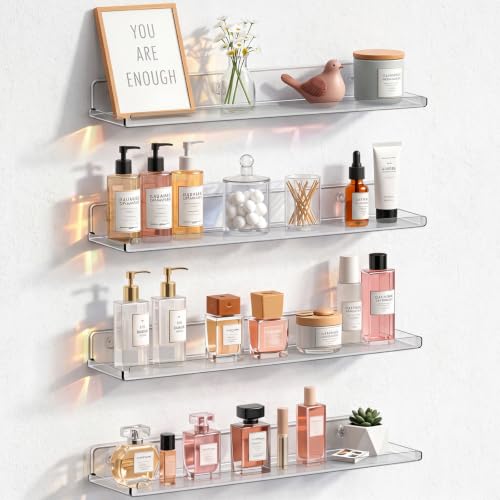
Sturdy & Stable: These floating wall shelves mount securely with expansion screws for a stable hold. Solid plastic material delivers lasting sturdiness, supporting up to 13 lb (6 kg) per shelf. All edges are well-finished for safety and front/side lips keep your essentials secure
6. Towel Racks and Bars

Wall-mounted bars above the toilet solve what a lot of small bathrooms share with mine, which is zero square footage left on either side of the vanity. A single 24-inch heated bar kept the hand towel I actually use within reach and dried it between showers without the mildew smell that overtook my last apartment’s folded stack. The heat runs low enough that you won’t scorch a synthetic, though you’ll still want a timer or switch you can kill.
The real distinction is between the rod you touch daily and the rod that holds display rolls. Working bars belong beside your dominant hand; open rods for rolled towels read as staging and nothing more. I learned this after watching guests reach past my pretty copper pipe to grab the damp loop draped over the shower door. Three rolled ivory towels on a wall-mounted double bar looked intentional for roughly one week, then collected dust and began to unravel at the edges like neglected produce.
Over-the-door bars can land in the same sightline if your bathroom door swings to face the tank. They solve the rental prohibition against drilling tile, but the towel sits inches from the flush zone, which the clean area behind the toilet itself avoids. What keeps either option from feeling cluttered is restraint in number, one or two pieces maximum, and a finish that matches the faucet or the frame you already own. Mixed metals above a toilet read as storage crisis; matched finishes read as decision.
Recommended Products

Material: Medium Density Fiberboard, outlasts wood in damp bathroom environments

Solid Paulownia Wood: Our floating shelves are crafted from 100% paulownia wood with a fine wood grain and attractive finish. Paulownia wood is naturally resistant to decay, warping, and pests, making these bathroom shelves perfect for wall decor in any living space.

[Excellent Quality for Long Lasting Use] - Our floating shelves are handcrafted from sturdy and durable MDF - sure to become an old companion that brings you a comfortable and durable experience. The metal rails are forged from the toughest steel and powder coated to prevent rust over time. We provide more stable and stronger construction - Each shelf is strong enough to hold up to 20 pounds with ease! Toilet paper, picture frames, and small greenery can be placed at will.
7. Decorative Baskets for Organization

Open baskets turn toilet-top shelving into a visual mess the second you drop a spare roll or a half-used bottle of shampoo inside. Solid-sided baskets solve this, but the trick is sizing them so they actually slide out without catching on the shelf above or the wall behind. Leave roughly a finger’s width of clearance all around, less and you’ll fight the basket every morning.
Humidity is the other calculation. Seagrass and raw rattan grow mildew in a bathroom’s wet cycles; painted metal, sealed wire, or poly-wicker hold their shape and don’t smell after a steamy shower. I learned this the hard way with a set of unsealed baskets that turned musty in one season.
The staging part matters too. A shelf of nothing but closed baskets reads like a laundromat. I put a small plant or a rolled hand towel in the gap between two baskets, or set one basket off-center and leave the rest of that shelf open. Odd numbers pull the eye better than even pairs; three baskets across an 18-inch shelf, or one basket plus two visible objects, keeps the rhythm from going flat.
Recommended Products

[Special Design] The over the toilet storage shelf features 4 tiers storage rack, along with 4 removable hooks, providing ample storage space. The compartment below the bottom tier helps organize your toilet, washing machine, dirty clothes cart, and many other large items.

MAXIMIZE BATHROOM SPACE - This 3-tier over the toilet storage rack transforms wasted vertical space into organized storage. Includes 4 removable hooks and a built-in paper towel holder, providing complete bathroom organization in one sleek unit. Perfect space-saving solution for small bathrooms, apartments, and dorms.
8. Acrylic Shelves for Minimalist Bathrooms

Clear acrylic or lucite shelving practically disappears against tile or painted walls, which is exactly why it works in bathrooms where every visible bracket and dark shelf line steals breathing room. The material reads as glamorous only when the rest of the space already leans modern or has something polished to mirror it back, like chrome fixtures or a frameless mirror. In a standard rental bath with basic white accessories, the same shelf can look like you grabbed whatever was at the home store instead of making a choice.
Weight limits run lighter than the thickness suggests, and acrylic’s real enemy is less the load than the long-term creep that lets a shelf sag slowly over months. Keep the display to rolled hand towels, a small plant, and maybe one glass apothecary jar full of cotton balls. Stack three hardcover books on it and you’ll watch the center bow by spring.
Fingerprints and water spots show instantly on clear surfaces, so the clean look lasts exactly until the first time someone reaches for the toilet paper you stored up there. I keep a microfiber cloth tucked behind the tank and wipe the shelf when I wipe the mirror, which is about twice a week in a half bath that sees real use. Skip acrylic entirely if you can’t commit to that rhythm; cloudy smudges read as neglect, not minimalism.
9. Wicker and Natural Textures

Rattan and seagrass baskets on a shelf behind the toilet warm up a bathroom faster than paint ever will. The weave catches light differently than a flat surface, and against white painted shelving or a natural wood slab, it keeps the space from feeling like a hardware showroom.
The thing to plan for is moisture. Humidity cycles in a bathroom will eventually stiffen natural fibers and can spot the finish if they sit damp too long. A basket with a fitted plywood or plastic liner inside, or one sized to hold a shallow tray, buys you years instead of seasons. I have seen unlined rattan stored directly on a shelf above a shower vent go gray and brittle in under two years; the same style with a simple plastic drip tray underneath looked almost new at four.
That warmth comes at a cost in visual tension. Sharp acrylic shelving, something these same readers might be weighing for a guest bath, reads as cool and deliberate where woven textures read forgiving and lived-in. My own take is that acrylic works when you want the objects on display to do all the talking; rattan works when the container itself is part of the story. In a half bath with no shower, I would skip the liner entirely and let the material age. In the bath my kids steam up for twenty minutes every morning, I would line the basket or keep it to the top shelf where condensation rises last.
Recommended Products

𝐌𝐨𝐝𝐞𝐫𝐧 𝐚𝐧𝐝 𝐕𝐞𝐫𝐬𝐚𝐭𝐢𝐥𝐞 𝐒𝐭𝐲𝐥𝐞: The hidden bracket design gives a clean, floating look that works beautifully as home decor wall shelves in modern, farmhouse, rustic, or industrial decor styles. Adds warmth and style without overwhelming your space for bedroom decorations, farmhouse living room decor, office wall decor, nursery, entryway, kitchen, and more

【Basic 3 Set Floating Wall Shelves】Just make your own storage space by using DOLLFIO 3 sets of wooden floating wall shelves! You can combine our floating wall shelves in any way you want. Our floating wall shelves are great for all-type rooms because they process a simple & simple design.
10. Arched Cabinets and Statement Shapes

Arched cabinets pull the eye up in a way straight lines never quite manage. The curve reads as intentional furniture, not leftover storage, which is exactly what you want in a powder room where guests linger for thirty seconds and notice everything. Most of these units sit 24 to 30 inches wide, a footprint that fills the gap above a standard toilet without crowding the sidewalls.
The arch itself needs about three to four inches of clearance above the tank lid or the whole piece reads cramped. In a guest bath with an eight-foot ceiling, that curve fills vertical space and stops the room from feeling like a utilitarian box. Scale matters more than style here: the same cabinet in a small master bath with a low ceiling fights the room, and in a bath with a pedestal sink it looks like furniture looking for furniture. I would skip it entirely if the toilet sits in a narrow alcove; the arch needs breathing room on both sides to register as a shape rather than a bulge.
Hardwood frames with a painted arch or a natural wood reveal both work, though paint lets you match the trim and keep the visual stack coherent from baseboard to ceiling. The interior shelves are usually fixed, so measure your tallest bottle before you commit.
Balancing What You Store With What You Show

A shelf behind the toilet lives in two worlds at once. It stores the spare rolls and hand towels you actually need, but it also faces anyone walking past the door. The mistake is treating it like a living room mantel where display is the whole job. Aim for roughly two-thirds functional storage and one-third decorative in a daily-use bath, or the pretty objects start feeling like nuisances when you’re reaching around them at 6 a.m.
The bottom shelf should earn its keep hardest. That is where extra toilet paper, folded hand towels, and whatever you grab every day belong. Decorative pieces, small plants, or a framed print sit higher, where they are seen but not bumped.
Seasonal rotation keeps the look fresh without a constant shopping habit. The same jar that holds cotton balls in January can collect shells in July if you already own them. A neutral palette of soft woods and simple textures, rather than bathroom-specific themed decor, makes that swap painless. I have watched friends buy whole new shelf sets for "spring refresh" when moving a single ceramic dish from their bedroom nightstand would have done the same visual work for nothing.
One crowded shelf undoes the whole point. The toilet area is already tight; crowded vertical space stops feeling taller and starts feeling chaotic. If a roll of paper has to balance on the edge of a decorative tray, the tray is in the wrong room.
Why Vertical Space Changes a Small Bathroom

Most American bathrooms built between 1950 and 1990 carry an 8-foot ceiling, a height that trains the eye to settle about five and a half feet up, roughly where the top of a standard medicine cabinet or towel bar sits. That low resting point closes the room in, especially when the footprint is already narrow.
A shelf mounted above the toilet, ideally starting around six feet from the floor and running closer to the ceiling, interrupts that habit. The eye follows the vertical line upward, and the wall reads as taller than the tape measure says it is. The effect is not illusion so much as redirection, the same way a curtain rod hung high widens a window.
Blank wall above a toilet does nothing counter the proportions. It is dead space that confirms the room’s limits. A shelf gives the eye a reason to travel, and even a light, uncluttered arrangement, maybe a stack of towels and a single plant, keeps the gaze moving rather than settling. That movement is what makes the bathroom feel larger than its square footage.
Rented apartments and first homes are where this matters most. The bathroom is rarely the space you gut-renovate, so shifting perception with vertical storage is the fix that survives a weekend and a tight budget.
Keeping a Cohesive Color Palette

Two or three colors is the workable limit for a shelf above a toilet to read as intentional rather than accidental. Go past that and the eye registers clutter before it registers calm, which defeats the point of using that awkward strip of wall at all. Most renters start with a base of white, off-white, or gray from existing tile or the landlord’s last paint job, and the shelf styling has to speak to that base rather than fight it.
The move is to pull one tone from the tile or the wall and repeat it in your shelf materials: warm white porcelain with warm white ceramics, cool gray paint with brushed nickel or pale concrete. That creates the seamless backdrop the "spa" references always point to. Against that neutral ground, one accent color in one material carries the whole idea: brass hardware and nothing else brass, navy in towels and a single soap dispenser but nowhere else, green only in plants and their pots. What convinced me, looking at the bathrooms that actually look finished in rental photos, is that the restraint reads as confidence. A chrome faucet, a black shelf bracket, and a rose gold soap bottle each make their own small claim, and together they cancel each other out into noise.
What I Learned From a Shelf That Fell

Plaster walls taught me the difference between finding a stud and thinking you found one. The first shelf I hung in our old apartment held for about six hours before the brackets ripped out in a cloud of gray dust and regret. Drywall is forgiving; plaster is_dense_, and a pilot hole that misses the lath behind it is just a hole to nowhere.
Tile over drywall added a second lesson. The anchors I grabbed looked right on the package, but they bit into the tile’s glaze instead of gripping what was behind it. A masonry bit through the tile and a toggle bolt into the stud meant buying twice and drilling twice.
The pipe shelf look, the industrial farmhouse style that shows up in every roundup, weighs more than it photographs. Galvanized steel and reclaimed wood look effortless because the photo hides the wall structure. That style needs structural support, not adhesive promise.
Which brings me to the $12 fix. Humid bathroom air turns adhesive strips into slow failure. After the plaster disaster and the tile misfire, I tried command strips on painted drywall as a temporary hold. Three mornings of shower steam, and the shelf sagged forward like a tired smile. Metal L-brackets, screwed into actual studs, solved what ten dollars of sticky backing could not.
Frequently Asked Questions
Can you put shelves above a toilet?
Yes, and the hidden brackets on floating shelves keep the wall looking clean. Leave 10–12 inches of clearance above the tank lid so you can lift the cover for maintenance without knocking anything over. Wall-mounted shelves need proper anchors and studs, while freestanding units straddle the tank without any drilling at all.
How do you organize above a toilet?
Use cabinetry, shelving, and baskets to turn that ignored strip of wall into actual storage. Floating shelves work for open display, cabinets hide the clutter, and towel racks keep linens dry and within reach. Aim for about two-thirds functional storage and one-third decorative so the space earns its keep without turning into a messy display.
What are some over-the-toilet storage ideas?
Options include floating shelves, over-the-toilet shelving units, built-in niches, medicine cabinets, ladder shelves, towel racks, and arched cabinets. Floating shelves suit modern looks, freestanding units work for renters, and recessed niches read as built-in architecture. Each solves a different problem: some need zero drilling, others need open wall during renovation, and a few simply lean against the wall and move with you.