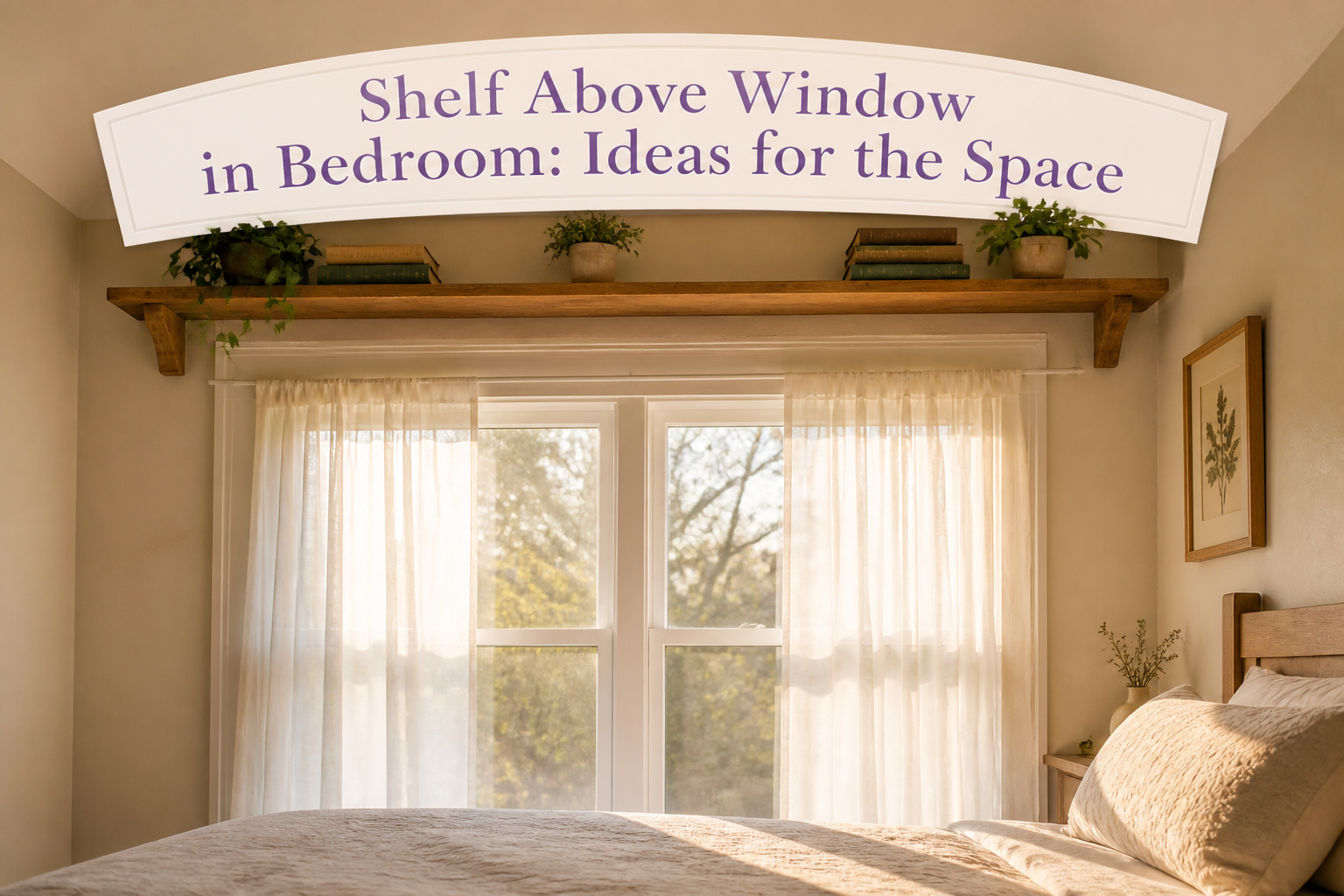
A shelf above window in bedroom setups turns dead wall space into storage or display, but only if you keep the ledge shallow and the load light. The two-inch gap above the casing is what makes the ceiling feel taller instead of compressed. I mount mine with toggle bolts into the drywall, not trusting stud finders on old window headers that shim out to dust behind the trim.
1. Floating Shelves Above the Window

Floating shelves free up the wall above a bedroom window without the visual weight of brackets or bulky supports. Set them about two inches above the window casing so the gap breathes; anything tighter reads squat and crams the ceiling down. I like the look of floating wooden shelves there, especially in a room where the bed sits low and the eye needs somewhere to travel upward. A few books with covers worth showing and a small knickknack or two, maybe something that sat unused in a closet for years, turn the shelf into a quiet focal point rather than dead storage. Done right, the horizontal line pulls the gaze up and past the window frame, the same trick as mounting a curtain rod high. The ceiling feels taller even when the measurement never changed.
Recommended Products

Well-designed Floating Shelves: Our white floating shelves for wall are made of MDF Laminate. These wall shelves can organize daily sundries to tidy your space, display your art pieces on the wall to decorate your home, and make it full of aesthetic flare.

Durable Material and Robust Connection : We use sturdy metal material with substantial weight, ensuring reliability and durability. Threaded joints are employed for solid connections, guaranteeing the product maintains its solidity after assembly. No worries about insufficient material or poor connections.
2. Bookshelves Above the Window for Storage

Bookshelves above a bedroom window turn that awkward strip of wall into storage for titles you love but rarely crack open. A pair of shallow floating shelves mounted an inch or two above the casing gains you a mini library without swallowing floor space. Most bedrooms leave less breathing room than a living room, so the key rule is willingness to climb: anything you shelve here needs to sit untouched for months at a stretch. A stepladder stashed in the closet solves retrieval, but if you are pulling the same novel down weekly, the shelf belongs lower. Vertical space sings when it does not fight you. Behind my own bed, cookbooks and old paperbacks I mean to reread someday line a window ledge eight feet up. They look warm up there, and the floor stayed clear for a hamper and a reading chair I actually use.
Recommended Products

Premium Material Feature: Our NANATI hanging bookshelf features light burnt premium pine wood and high-quality elastic bands, combined with thick wrought iron supports, ensuring a superior texture infused with modern minimalism, a conversation piece for your living room.

Original Rustic Design: Mounted bookshelf for wall features a unique rustic wood design, adding a touch of charm to any living space

YOUR BOOKS LOOK LIKE THEY FLOAT: The bracket hides completely inside the bottom book, so all anyone sees is a clean stack rising off the wall. These invisible shelves floating shelves turn a paperback pile into wall art in any room, no bulky brackets and no visible hardware.
3. Knickknack Display Above the Window

Small objects tend to work best when they share a palette with the room you already have. In my bedroom the walls are a soft sage and the bedding reads cream and terracotta, so a row of amber glass bottles and a single brass figurine feel collected rather than random. The shelf itself disappears and the eye travels to the things.
Centering the arrangement matters more than symmetry. I started by placing the tallest piece dead middle, then flanked it with shorter pairs stepping down toward the edges. The middle acts like a spine; without it the shelf looks like a windowsill that got away from you.
Weight is the real limit. A shallow ledge above a window cannot hold a heavy ceramic bust or a stack of vintage bowling balls no matter how good they look. I keep my heaviest piece under two pounds and feel the bracket with my hand after a week to check for pull. If the collection grows, the light pieces move up and the dense ones find a lower shelf elsewhere.
The dusting is worse than for objects at eye level. I choose pieces with smooth surfaces and skip anything with crevices that trap lint from the window track. A quick swipe with a microfiber cloth every Saturday takes thirty seconds; intricate carvings would make me avoid the task until the shelf looked abandoned.
Recommended Products

Ideal for Plant Display: Our transparent window shelves seamlessly integrate with your window, allowing unobstructed views of your plants. Protect them from wind and rain while promoting growth and beauty. Please note that pots can be placed with a base diameter up to 3.6 inches

[Small Floating Shelves] - Set of 4 small wall shelves with 2 types of installation: up or down, each small shelf size is 5"L x 5"D x 1.57"H.

【Vinyl Display】Displaying your favorite records on the clear acrylic shelves, you can easily tell the records and make it more clear to show off your collection. Maximise wall space to maintain orderly record storage whilst creating an aesthetically pleasing decorative feature for your room.
4. Plants and Greenery Above the Window

Trailing pothos or a compact snake plant on a shelf above window in bedroom setups brings in living color without eating nightstand real estate. I learned the hard way that south-facing glass cooks leaves from about two inches above the casing; morning light from an east window is safer for most varieties. Watering means a stepladder or stepping onto the bed frame, so I keep a mist bottle handy and use planters with saucers rather than risking drips onto bedding below. The breathing room above the window still reads as open space, but the greenery frames the glass so the view outside starts to feel like part of the room.
Recommended Products

𝐌𝐨𝐝𝐞𝐫𝐧 & 𝐌𝐢𝐧𝐢𝐦𝐚𝐥𝐢𝐬𝐭 𝐒𝐭𝐲𝐥𝐞 - Featuring clean lines and a rustic brown finish, these wall-mounted shelves bring warm farmhouse charm and modern style to any space. Perfect as shelves for room decoration, book shelves display, and rustic farmhouse wall decor — they elevate your bathroom wall art vibe, bedroom aesthetic, living room style, kitchen organization, office setup, and laundry room storage all in one versatile design

Material: Medium Density Fiberboard (MDF)

𝐄𝐱𝐩𝐚𝐧𝐝 𝐒𝐩𝐚𝐜𝐞 𝐚𝐧𝐝 𝐌𝐨𝐝𝐞𝐫𝐧 𝐃𝐞𝐬𝐢𝐠𝐧: With clean lines and a warm finish, these small bathroom shelves expand wall space in dry bathroom zones and double as stylish bathroom organizers and storage. Effortlessly organize towels, toiletries, and decor with the invisible bracket that creates a sleek, modern display appearing to float seamlessly on your wall — perfect for over the toilet bathroom organizer setups and completing your bathroom wall decor
5. Artwork and Framed Photos Above the Window

A shelf above window in bedroom can pull double duty as a gallery ledge, and the effect is stronger than most people expect. Eyes travel upward to whatever sits there, which stretches the wall visually and makes ceilings feel higher than they measure. That same trick works whether you hang a single large horizontal frame or lean a row of smaller ones against the wall.
The spacing matters more than the art itself. Two inches of clearance above the window casing leaves enough breathing room that the shelf does not look wedged in place, yet keeps the grouping tight enough to read as one framed moment. A six-inch-deep shelf fits most standard frames without them swaying forward.
Weight is the real limit. Deep frames or pieces behind glass get heavy fast, and a shelf mounted into drywall alone will sag or pull free over time. I would rather see someone use a shallow ledge with lighter pieces, metal prints, or empty frames, and anchor the shelf into studs or with proper toggle anchors, than watch a heavy watercolor crash down at 2 a.m.
Recommended Products

MULTIPLE SIZE OPTIONS – This heavy duty toggle bolt assortment includes 3 sizes (1/8 in, 3/16 in, 1/4 in) to help you choose the appropriate size for drywall anchor applications based on wall type and intended use. Suitable for selected hanging projects such as hanging pictures, curtain rods, and plants when used correctly. Please refer to the size chart and installation guidance before use.
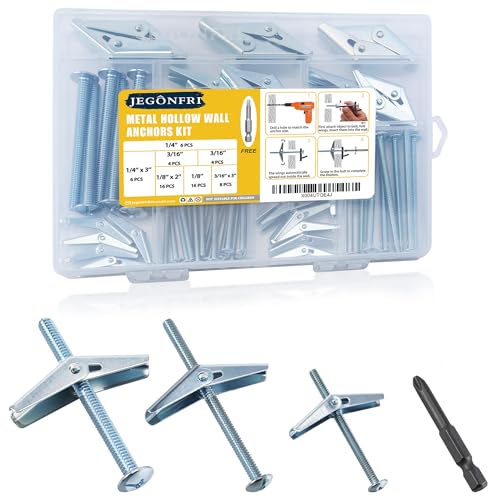
Heavy Duty Wall Anchors:These toggle bolts feature a wing nut design that opens behind hollow walls. The toggle bolt design spreads force evenly and prevents the anchor from pulling out under weight.

QUALITY MATERIALS: 3/16 toggle bolts for drywall made of high quality galvanized carbon steel, high strength, not easy to rust and corrode, and long service time
6. Lighting Fixtures Above the Window

String lights on a shelf above window in bedroom setups cast light outward and upward instead of down at your face, which is exactly what you want after dark. The ledge hides the battery pack or outlet block behind the casing, and the reflection off the glass doubles the glow so a thirty-bulb strand reads like sixty.
Small lamps work too, though the cord is the whole story. A recessed socket shelf, or even a shallow ledge with a 1-inch lip, keeps the base from tipping and channels the wire straight down the inside edge of the casing. I have seen people run it behind the blind header, but if your blinds mount inside the frame that gap vanishes. Clip-on cord covers the same color as your trim make the line disappear against the casing; paintable ones run about four dollars a foot and take a wall-matching latex in one coat.
LED strips along the underside of the shelf wash the wall above the window, which pushes the eye up and the ceiling with it. The trick is the dimmer. Full brightness turns the shelf into a floating UFO; anything under 40 percent reads as height. Most cheap strips come with a remote, so the block lives up top and the only visible wire drops to the nearest outlet, usually the one behind your nightstand if the window sits between beds.
Bulb access matters because dust settles up there fast and dead LEDs in a built-in strip mean replacing the whole run. String lights you can lift down in a minute. For anything fixed, plan the shelf depth so your fingertips reach the fixture; two inches deeper than your hand span, and the maintenance becomes a stepladder job you will skip until half the strand is out.
Recommended Products
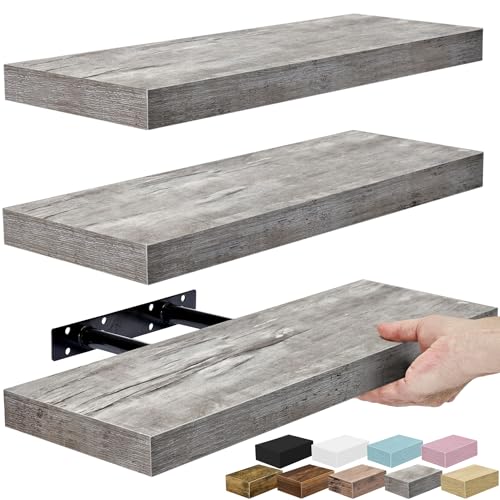
Floating Shelves for Wall Storage: Display charming showpieces, home decor items, and other prized possessions while offering functional wall book shelf storage. Our bathroom shelf Measures approximately 16.25 inch L x 5.50 inch W - Each floating shelf is 1.5 inch thick
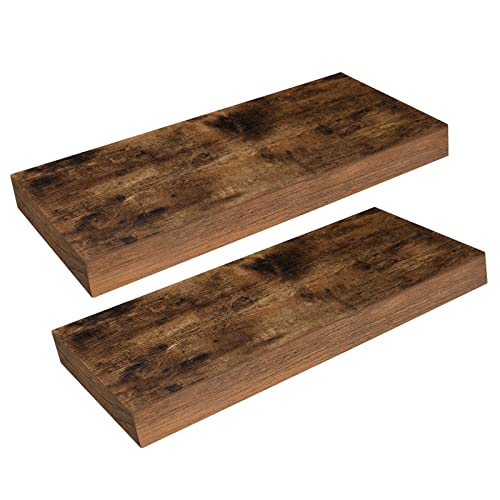
High Quality: Sized in 15.7"L x 7.9"W x 1.5"H. The 1.5" thick floating shelves for wall are fixed with Invisible and enhanced dual-pipe iron Brackets, stable with great load up to 22 lb per wall mounted shelf

Enhanced Lip Protection - These floating wall shelves feature a carefully designed front lip, offering additional protection to prevent your items from slipping or falling off. Display your cherished memories, books, plants, picture frames, funk pop or decorative items with confidence, knowing they are securely held in place.
7. Curtain Rod Height Above the Window

Mounting a curtain rod closer to the ceiling than to the window frame tricks the eye into reading the wall as taller than it is. I noticed this first in a bedroom with only eight-foot ceilings: the window sat low, and the bare space above it flattened the whole room. After moving the rod up about a foot, the drapes hung long and the window itself seemed larger, which in turn made the wall feel higher.
The upper window space only reads as usable if the proportions justify it. Once the rod sits near the ceiling, the strip between the window frame and the rod narrows to maybe six or eight inches. A shelf squeezed into that gap looks stranded and awkward rather than intentional. The technique works better as a companion choice: get the height illusion in place with the rod, then decide if the remaining architecture still calls for a shelf or if the clean vertical line is enough on its own.
In a room with nine-foot ceilings or a window already set high, the gap widens and both moves can coexist. Lower ceilings force a pick. I would take the rod trick every time in those tighter rooms; it costs only hardware and fresh holes, and it changes how the whole wall feels. The shelf can wait for a wall with more breathing room.
Recommended Products

【Transform Books into Wall-Mounted Art】: The ultra-slim profile disappears behind a single book, creating a morden invisible shelf that makes your books look like they are floating. Perfect for book lovers and home decor enthusiasts.
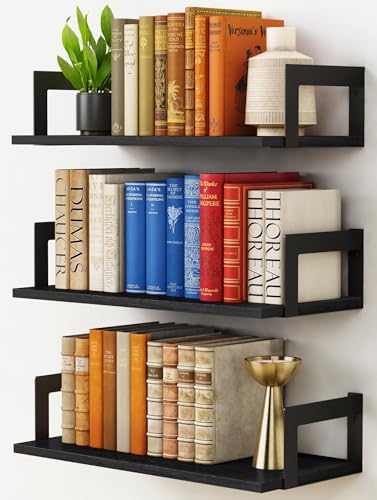
[Perfect Floating Book Shelves] Floating book shelves for wall set of 3 (17 Inches Long & 8 Inch Deep) are perfect for creating additional storage without taking up floor space. They can be installed at various heights, allowing you to customize your wall shelving setup according to your needs. These wall book shelves are ideal for storing books, plants, or personal items like pictures, photo albums, collectibles etc.

【Transform Books into Wall-Mounted Art】: Another way to store and display your favorite books. Stacking books on the sturdy metal shelf, the shelf will become hidden behind the books which looks like books are floating on your wall. Perfect for book lovers and home decor enthusiasts.
What Works Best Above a Bedroom Window

A shelf above a window in bedroom setups has to earn its keep on four counts at once. Storage is the obvious appeal: that strip of wall is dead space otherwise, and a ledge wide enough for books or baskets pulls overflow upward where floor space does not exist. Decorative weight matters just as much, because anything at eye level when you stand becomes part of the room’s frame. The trick is choosing objects big enough to read from the floor, small enough to not block light, and not loading the shelf so fully that it reads as clutter rather than intention.
Height illusion is the subtler payoff. Mounting close to the casing, about two inches above, keeps the shelf from floating in a void, but keeping some breathing room below the ceiling stops the installation from looking compressed. The eye travels up, registers the vertical line, and reads the wall as taller than it measures. That only works if the shelf itself is slim; a deep ledge subtracts the height it supposedly adds.
Accessibility is where most plans break. What goes up there should be light, seldom-used, and safe to reach with a step stool. Heavy rotating items, daily-read books, or anything glass within a dog’s tail radius is a mistake. The best use I have seen reserves the spot for a camera that gathers dust anyway, a memoir already finished, a Polaroid whose purpose is finished too: objects that justify their security by meaning more than function. Balance those four needs and the shelf above the window quits being an afterthought.
Recommended Products

❤PROFESSIONAL DESIGN: Includes 6 Pack Acrylic Small Adhesive Wall Shelves, Transforms the wasted space on the wall into a showcase area,for living room, bedroom, or office.

Stable Thread Lock: Utilizing a threaded lock and requiring a hex key for tightening, this hanging plant shelf offers stability and prevents tipping. Made of transparent plastic, promoting optimal indoor growing conditions for your plants
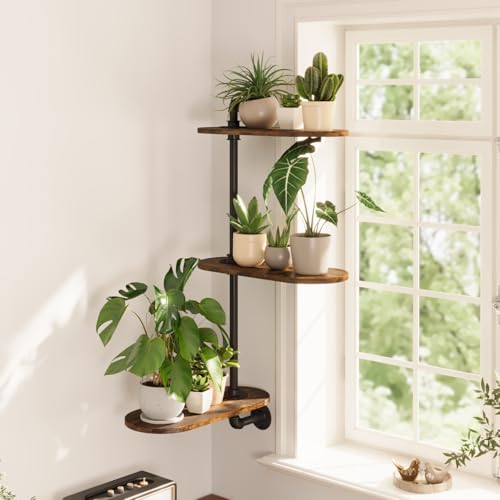
3-TIER ROTATING SHELVES — NO MORE HAULING POTS: Give the unit a light push and all three shelves swing 180° together on the wall bracket. Rotate 90° once a week so every plant grows straight instead of leaning toward the glass. Swing the shelves aside to open the sash, wash the window, or reach the sill — without taking down a single pot.
Sizing and Styling the Shelf

The shelf above a window in a bedroom sits where the wall meets the ceiling, so proportion matters more than it does at eye level. A board that feels substantial elsewhere can look paper-thin up there, while something too deep casts a shadow that shortens the wall visually. What read as balance against the window width, not the whole wall; center the shelf on the glass, not the studs, and the eye settles.
Keep the styling tight to the room’s palette rather than treating the shelf as its own zone. I used to set out small objects in a row and wondered why they looked like clutter from the doorway. Grouping in threes, repeating one color from the bedding or the curtains, and leaving bare wood or painted surface between items does more than any extra piece could.
A shallow ledge, maybe four fingers deep, already holds a stack of books spine-out, a small vase, a framed print leaned against the wall. That is enough. The mistake is packing it like a mantel twelve feet off the ground, where no one can adjust a tilted frame without a step stool. Leave negative space. The window itself is the point.
Recommended Products

Floating Shelves for Wall Storage Set of 6 - The size of the WOPITUES floating shelves for wall is 16.5*6*0.6 inches. WOPITUES Floating Wall Shelves for Bathroom/Bedroom Set of 6 could give you extra storage space in the bathroom, bedroom, guest bathroom, kitchen, and living room. You can install our floating shelves for wall anywhere you like. Let’s make life simpler.

Centerpiece of Room Decoration - These shelves boast a distinctive design and an elegant shape, making them a focal point that elevates the style of any room. Ideal for the living room, bedroom, study, bathroom, laundry room, children's room, or office, they reflect the owner's sophisticated taste and blend seamlessly with various decor themes.

𝐌𝐨𝐝𝐞𝐫𝐧 & 𝐌𝐢𝐧𝐢𝐦𝐚𝐥𝐢𝐬𝐭 𝐒𝐭𝐲𝐥𝐞 - Featuring clean lines and a warm walnut-like finish, these small floating shelves bring mid-century modern and natural wood charm to any space. Perfect as shelves for room decoration, book shelves display, and rustic wood wall decor — they elevate your bathroom wall art vibe, bedroom aesthetic, living room style, kitchen organization, office setup, and laundry room storage all in one versatile design
Securing What Goes Up High

Wall anchors rated for drywall alone will fail under the leverage of a loaded shelf hung above your head, especially on a window wall that tends to carry less framing than one running full length. I learned this the hard way with a bathroom shelf that held for three weeks, then woke me at 2 a.m.
The mounting hardware needs to bite into studs, or into toggle bolts that open wide inside the cavity. Window headers do give you solid wood sometimes, but old houses shim those headers unevenly; the stud finder chirps, the drill holes, and you hit nothing but dust. When that happens, a snap-toggle through the drywall into the open space behind distributes the pull far better than an anchor that depends on the face paper holding.
Weight matters more than it looks. Books collect water weight in humid summers; that lightweight display of dried branches becomes a basement-dweller’s collection of field guides. I plan for double what sits there in January. The bracket style matters too, particularly for floating shelves where the rod hides inside the shelf itself. Those rods torque outward; one weak bolt and the front lip drops first, scattering whatever you arranged so carefully toward the foot of the bed.
Recommended Products

Designed with solid steel and zinc plating

COMPLETE SET FOR VARIOUS MOUNTING NEEDS: This Heavy Duty Toggle Bolts Assortment Kit includes 164 pieces of drywall anchors, toggle bolts, and screws in multiple sizes to fit different installation requirements. The set contains 40pcs #6×1", 40pcs #5×1", 40pcs #7×1", 20pcs #6×1-1/5", 12pcs #8×1-3/5", and 20pcs black #8×1-1/4" wall anchors, along with toggle bolts in 1/4" (4pcs), 3/16" (12pcs), and 1/8" (16pcs). Ideal for mounting shelves, mirrors, or curtain rods.
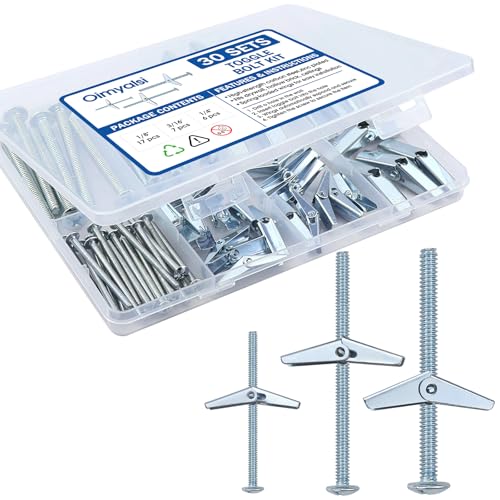
【Multiple Sizes Available】This drywall toggle bolt kit includes 1/4", 3/16", and 1/8" anchors—ideal for different wall types and weight requirements. Choose the right size for your drywall, hollow brick, or ceiling installation.
Frequently Asked Questions
How can I decorate the space above my window?
Floating shelves, bookshelves, knickknack displays, plants, artwork, or lighting fixtures all work well above a bedroom window. The key is choosing items that read from floor level without blocking light, and leaving enough breathing room so the shelf does not look wedged in place. A two-inch gap above the window casing keeps the proportion open.
What items should I place above my window?
Books you rarely reread, small plants in lightweight planters, framed prints or metal art, string lights, and collected objects that share your room’s color palette all fit. Keep each piece under two pounds unless the shelf is anchored into studs, and avoid anything with crevices that trap dust or anything you need daily.
How high should I install shelves above my window?
Set shelves about two inches above the window casing. Any tighter and the gap looks squat, crams the ceiling down, and reads as an afterthought rather than an intentional line. That small breathing room lets the eye travel upward and past the frame, which stretches the wall visually the same way a high curtain rod does.