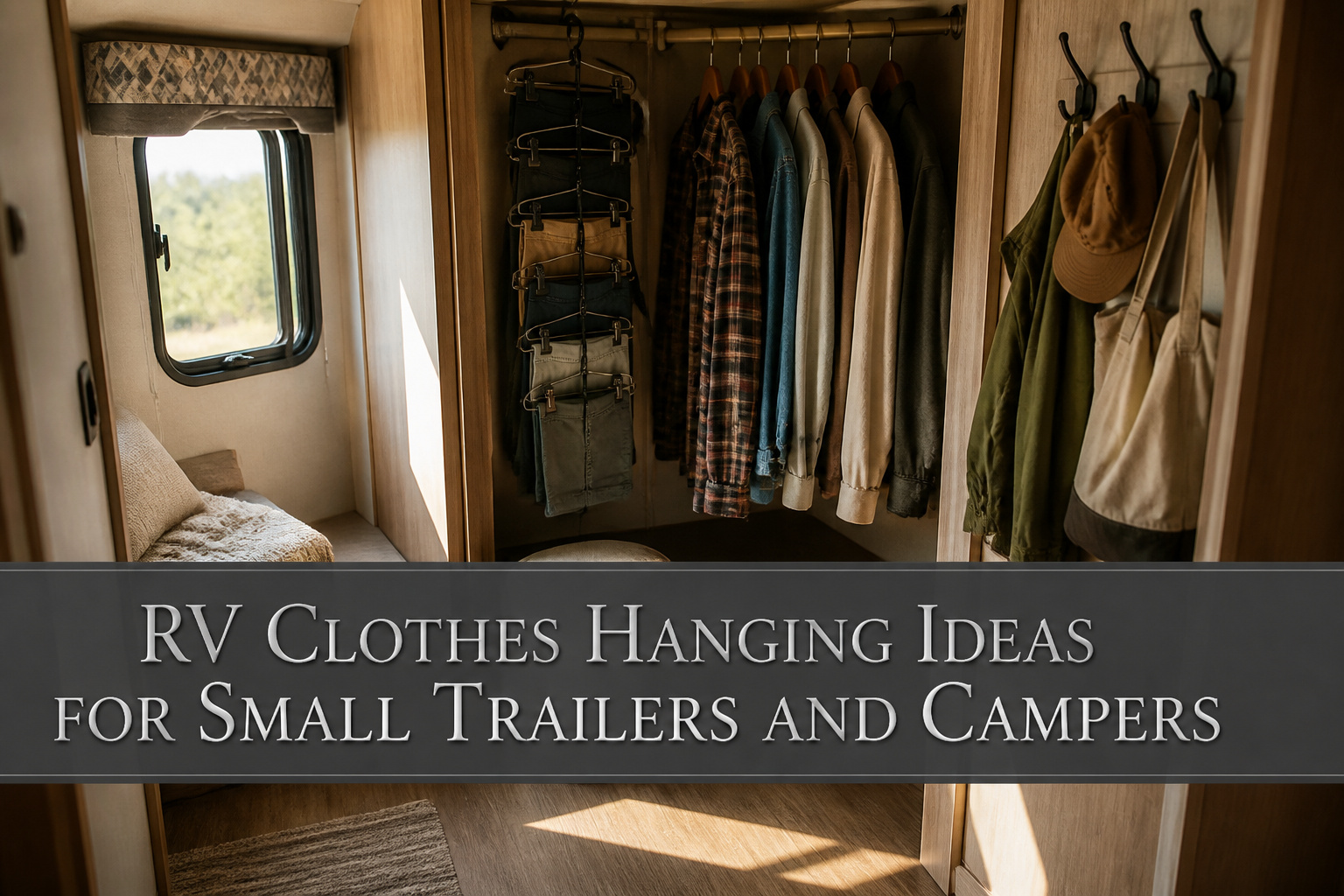
RV clothes hanging ideas work only when they account for walls that bow, doors that run narrower than standard, and closets under three feet tall. The layered hangers and tension rods that solve home storage often fail in a trailer because no one checked the actual measurements first. A five-tier pants hanger nested vertically where two pairs might have hung before is the kind of fix that only makes sense once you know the rod sits high enough to leave half the cavity below it empty.
Layered Hangers for Vertical Space

The closet rod in most RVs sits high enough that half the cavity below it stays empty. Layered hangers let you stack two or three garments on one hook, effectively doubling or tripling that rod capacity without any installation. I look for the S-shaped cascading style or tiered clips that drop each layer slightly below the last, so every shirt stays reachable.
These work best for lightweight layers, t-shirts, thin pants, or skirts. Heavy coats and thick denim pull the whole assembly off balance and bulk up faster than spreading them across standard hangers. In my own browsing for RV clothes hanging ideas, the five-tier non-slip models stood out for pants specifically, five pairs nested vertically where two might have hung before.
The real gain is reclaiming height that goes unused in most small-trailer closets. Floor and shelf space fill first because those are what you see; looking up is the habit to build.
Recommended Products

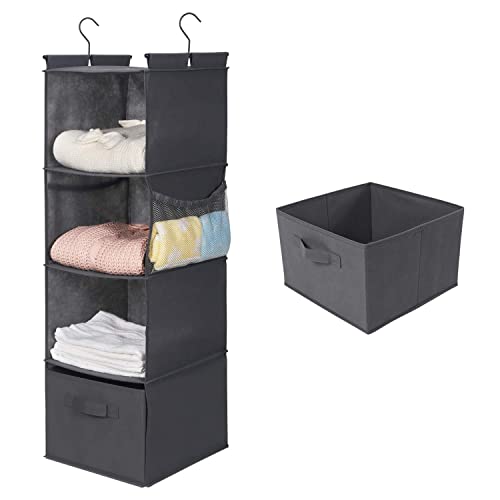
The hanging organizer measures 23 ½" H X 12 ¼" W X 12 ¼" D, each shelf is 7 ½ "H X 12 ¼" W X 12 ¼" D. In addition, the hook is 6" H.
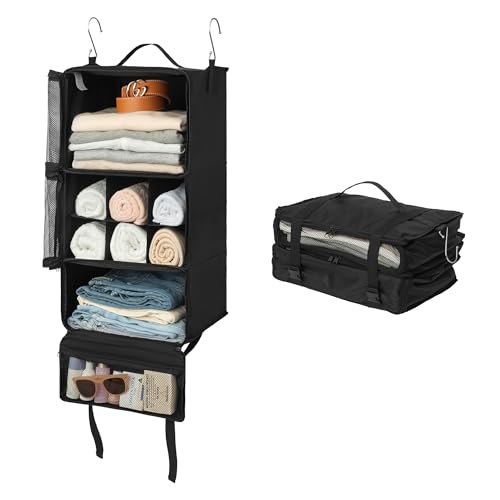
Extra Large Packing Cubes: Measuring 13"L x 9.75"W x 23.5"H, our travel organizers feature a top handle and offer plenty of space to keep clothes neat and easy to reach in suitcases, closets, or carry-ons.
Vertical Space Saving: The 3-shelf closet shelf organizer measures 12 ¼"L x 12 ¼"W x 23 ½"H, maximizing vertical space and organizing your room, making it perfect for small closets in bedrooms, RVs, college dorms, and kids rooms.
Hanging Storage Shelves in Closets

A hanging shelf organizer turns a single closet rod into three tiers of folded storage, which matters in an RV because most closets run under 3 feet tall. Standard shelving would never fit that height, but low-profile fabric or wire versions slide right onto the rod and stay put.
I think the real trick is deciding what earns a shelf and what still gets hung. Bulky items, jeans, sweaters, and spare linens stack well in the tiers and stay visible enough that nothing gets lost in the back. Items that wrinkle fast, button-downs, dresses, anything you’d iron at a campground, those keep their hangers. The shelf itself takes up maybe a third of the rod width, so you still have room beside it for a short run of hanging clothes.
Wire grids hold shape better but clink against the rod on travel days; soft-sided fabric organizers with cardboard inserts go flat and quiet, though they sag under weight after a season or two. Either way, measure your rod height first: under 3 feet leaves no wiggle room for a tall unit, and returning a packed organizer is not how anyone wants to spend their arrival afternoon.
Recommended Products

Heavy Duty Load Capacity: Thickened ABS plastic; each hanger holds up to 30 lbs; supports winter coats, denim, sweaters, hoodies and shirts without bending, warping or cracking; wrinkle-free

Create 4X Storage Space: The magic hanger can make full use of the idle space beneath the closet, enabling a space that could only hang 1-2 pieces of clothing to hold 6 pieces. Through practice, for a space with a width of one step (50cm), using our smart hangers, 48 tops can be neatly hung, surging to 4 times compared to the traditional method. With it, you can easily hang more clothes, completely saying goodbye to the trouble of folding clothes
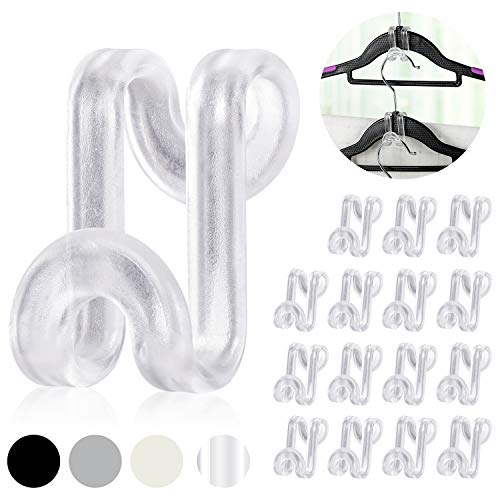
High Quality Hanger Hooks: Made of environment PP material that positioning in the design is beautiful and reasonable, the design is novel, fine workmanship, good quality and style vogue, high grade
Over-the-Door Organizers

An over-the-door organizer on the bathroom door freed up the entire cupboard in the trailer I was reading about. Everything sits in clear pockets, easy to grab and easier to put back, which matters more in an RV than you’d think until you’re fumbling for a toothbrush at 6 a.m. RV doors run narrower than standard, so measure before you buy, same as you would for a hair-tool holder over a cabinet door.
The bedroom door works just as hard. A shoe organizer there holds rolled belts, folded leggings, socks, whatever used to disappear into the black hole of a too-small closet. Some owners swap the bathroom version to this duty once they realize they need the bedroom space worse. At under three feet, a hanging closet organizer with shelves still fits most RV closets even when they are not full height.
I would start with the bathroom door, not both doors at once. One organizer teaches you what you actually reach for, and the second purchase after that is the one you keep.
Recommended Products
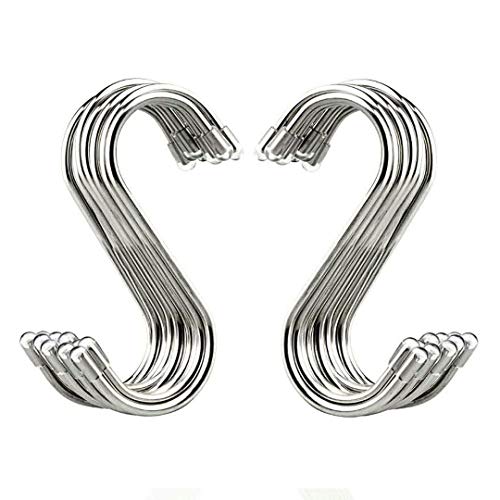
MATERIAL: Stainless Steel; COLOUR: Silver color
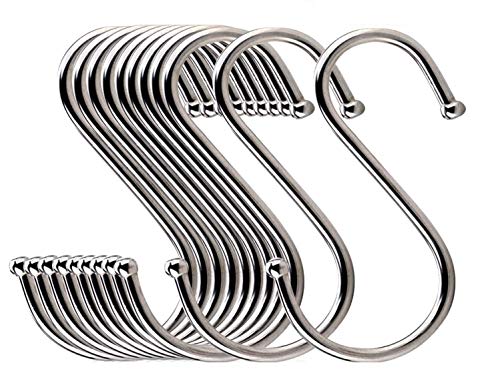
Size and amount: s hook length: 3. 3 inches/ 8. 4 cm; The big end fits max 1. 53 inches / 3. 9 cm pole, another small end fits max 0. 87 inches / 2. 2 cm pole

MATERIALS: Made of durable PP plastic these hanger hooks are lightweight yet sturdy enough to support layered hanging
Tension Rods in Shallow Cabinets

Spring-loaded rods slip into shallow RV cabinets where a real closet rod would stick out past the door frame. Run one front to back inside a wardrobe only ten or twelve inches deep, and lightweight garments, spray bottles, or cleaning cloths hang straight down without crowding the aisle.
The same setup works pasted across a cabinet opening with a carabiner clipped over the rod for trash bags or a paper towel roll. Zero drilling and maybe six dollars at a hardware store makes it the kind of fix you keep spare rods around for. The one limit is weight; a tension rod pressed between two thin cabinet walls will sag if you load it with jeans or wet towels. Stick to the light stuff and it earns its space twice over.
Recommended Products
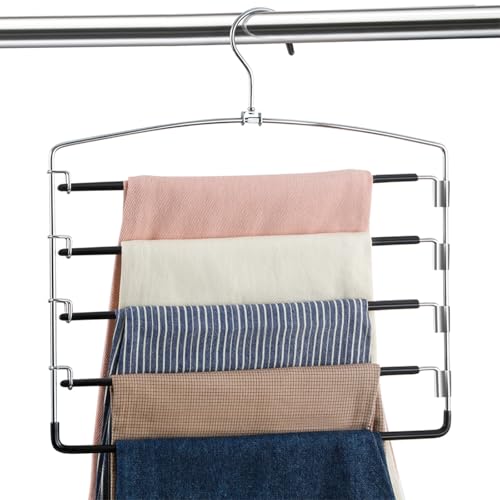
Pants Hangers Space Saving: 5 tier trousers hangers, each space saving hanger organizer at least holds / held up much jeans, scarfs or other clothes, strong bearing strength.Save more space for your closet, keep your closet clean and orderly. It is an ideal pants hangers for women and men

STRONG METAL CONSTRUCTION - Made of premium high manganese steel, with high hardness and strength. The multi functional pant rack hanger is stronger and more durable than ordinary plastic hangers, not easy to deform or break.

Sturdy Construction: Crafted from durable metal with non-slip rubber grips, this pants rack ensures your garments stay securely in place without sliding off.
Command Hooks Throughout the RV

Adhesive hooks surface in almost every RV storage discussion for good reason. The 3M Command line holds up to five pounds on some models, enough for a jacket, a daypack, or a damp towel, and the strip pulls off clean when you trade rigs or sell. That removability matters if you are renting or plan to.
The obvious spots are the entry wall for coats and the bathroom for a toiletries bag. Less obvious works better. Inside a cabinet door, a hook keeps a belt or a baseball cap from sliding off a shelf. Beside the bed, one holds tomorrow’s clothes without the dresser real estate. The shower wall itself, dried after use, becomes a drying station for swimwear or a rain-soaked windbreaker that would otherwise mildew in a drawer.
Decorative versions in oil-rubbed bronze or brushed nickel let a hat collection read as intentional wall art rather than last-resort storage. The cost runs a few dollars each, and a weekend install is literally minutes.
The failure mode is weight over time in humid air; buy the size rated for more than you intend to hang, and replace the strip rather than trust a faded one.
Recommended Products

【Space-Saving Design for Small Spaces】: Transform unused door space into a neat and organized zone! This over the door shoe organizer fits standard doors and keeps your floors clutter-free — ideal for dorm rooms, apartments, or small closets. (Tip: Check your door clearance before hanging.)

[CAPACITY & SMART ORGANIZATION] Featuring numerous clear PVC pockets on the front, this XL hanging jewelry organizer offers generous space to categorize your entire collection. It allows you to store rings, earrings, studs, and hair clips individually, keeping small accessories separated and easy to locate. This high-capacity design maximizes storage potential while serving as a comprehensive system that holds more than a traditional jewelry box.
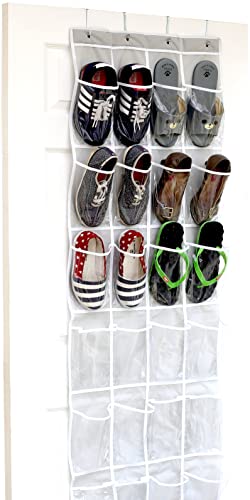
Maximize Storage with 24 Clear Pockets: Overall size 19" W x 64" H
Rolling Clothes Instead of Folding

Rolling clothes instead of folding them squeezes air out of the fabric and reduces the volume of each piece, which matters when your RV closet is half the depth of one at home. The rolled cylinder stands upright in a drawer or bin, so every garment stays visible and pulling one free does not collapse the stack. A shallow awkward compartment that would frustrate folded clothes becomes usable; add a bungee cord across the front and the rolls stay put on the move.
Cottons and synthetic knits roll clean and stay smooth. Linen and heavy denim resist, holding a tight curl that creases worse than a fold. I leave those pieces for the wardrobe bar, which in my trailer sits empty most trips because the wardrobes are filled with bins of rolled everything else.
Recommended Products
PRODUCT DIMENSIONS: The organizer measures 12”L x 11.5”W x 28”H. Each unit is 12"L x 11.5"W x 7"H.It is easy to install, no complicated installation steps and no tools are needed.

Premium Material: Made of 600D Oxford Cloth Fabric which is more sturdy and tear-resistant than the non-woven fabric. The hanging organizer measures 28'' H (Hooks Included) x 11.8'' W X 11.4'' D
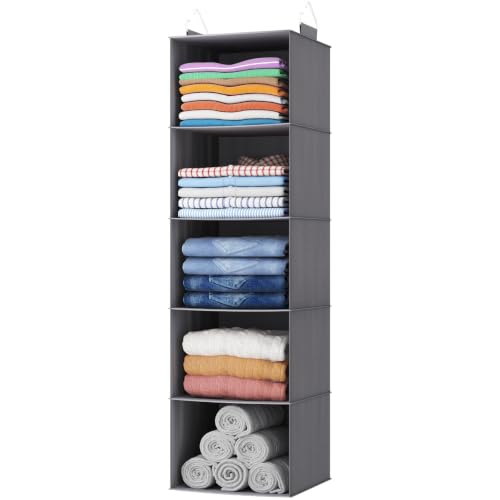
Capacity & Storage: This closet hanging organizer has five shared 11" x 11" x 7.9" compartments (total 11" x 11" x 39.3") store sweaters , towels, pants , and shorts. Total 7.5kg capacity (1.5kg/compartment) organizes diverse items efficiently
Bins Under the Bed for Seasonal Clothing

RV beds with lift-up platforms leave a long, low cavity that turns into a single junk pile without some structure inside. Four large bins slid end-to-end create instant compartments for different categories of clothes; packing and unpacking gets easier when summer tees live in one bin and winter base layers in another. Soft-sided bins with a front zipper help too: unzip the face and pull out one sweater without lifting out the whole stack. For bulkier seasonal items, vacuum bags flatten coats and boots enough to slide underneath and reclaim closet rod space for what you are actually wearing. When the weather turns, the swap is just a bin rotation: under-bed becomes the holding zone for whatever is three months out, and the tight closet keeps only the current season within reach.
Recommended Products

Non Slip Foam Padded Hangers NO Shoulder Bump: Each metal swing arm of the hanger is wrapped by thick and soft EVA foam, which will not scratch clothes or people. Its good anti-slip properties keep your clothes firmly on the hanger. And the hangers that don't leave shoulder bumps because the soft foam material help keep the natural shape of clothes. Besides, EVA foam will not degrade or fade over time. NO worry about it fading or linting like velvet hangers or felt hangers.

Durable Closet Organizers and Storage - Made from durable plastics with ideal dimensions measuring at: 9.3" wide and 0.8" thick. Every hanger organizer can hold 5 garments (up to 6 lbs) horizontally and (up to 8 lbs) vertically. It's great for hanging your coat, suit, jacket, sweater, shirt, pants, jeans, dress, purse or accessories.

🏡【 Closet Organizers for all Types of Hanger and Rods 】- 1.62 inches hook opening is designed big enough for a wide range of closet and wardrobe rods, the hook can rotate 360° to hang anywhere, and the slot(1.1"L * 0.5" H) is big enough for all types of hangers( such as large size plastic hangers). They are easy to use and convenient to get hangers in and out of
Hanging Laundry Bags

A 20 by 30 inch hanging laundry bag with two hook options runs about thirteen dollars and solves the dirty-clothes problem without touching the floor. Over-door hooks fit the bathroom door in most small trailers; damage-free utility hooks let you park one on the bedroom wall without drilling into thin RV paneling. I like that the straps at top mean the bag lifts off entirely for laundry day, so you’re not wrestling hooks at the laundromat.
Structured fabric holds its shape better than a basic drawstring sack when the bag is only half full, which matters in a camper that rocks on the road. Two placement strategies work: the bathroom door keeps wet clothes and towels contained, while the bedroom wall collects everyday wear before it mixes with clean outfits. The limitation is weight; at five pounds per hook, keep heavier loads distributed or move the bag to a stud-backed surface before it gets overloaded.
Recommended Products
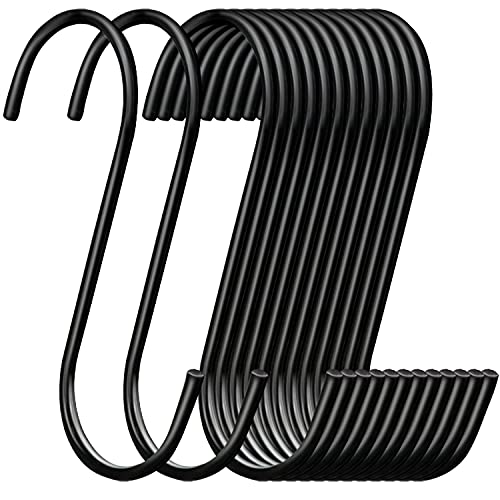
Size: 3.7 inches length, 1.2 inches of openings width. Please check the diameter of your closet rod before purchase.
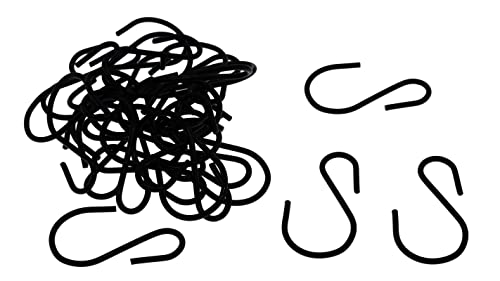
1. These mini S hooks are made of high quality iron, with 0.07in (2.0mm) diameter, durable and sturdy.
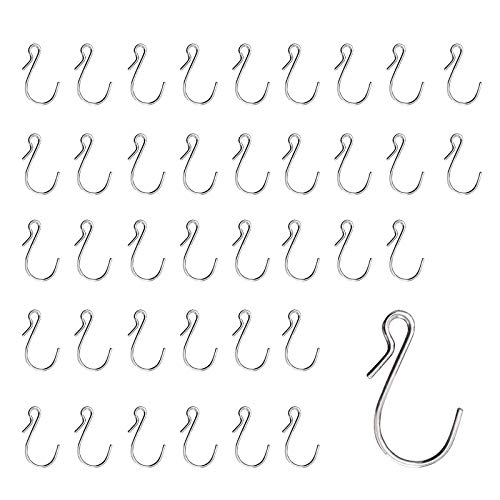
MATERIAL: Stainless Steel; COLOUR: Silver color
Closet Door Storage

Closet doors inside an RV are dead space until you stick something to them. I like adhesive hooks for robes or the next day’s outfit, spaced low enough that the clothes clear the door jamb when it swings shut. A shoe organizer with 30 pockets, hung on the interior face, holds underwear and socks just as well as shoes; at under fifteen dollars, it is cheap enough to replace if the backing adhesive gives out from humidity. The backing will give out eventually, by the way, especially if your closet shares a wall with a bathroom.
Small racks screwed into the door itself work for belts or scarves, though most RV closet doors are hollow-core and need anchors that bite into the thin skin. Test the swing before you load anything. A rack that holds six inches of clearance when the door is open becomes a door that will not close once you pack for shoulder season. The three-shelf hanging organizers mentioned elsewhere solve the same problem from the rod down; the door itself is for what you need at arm’s reach without crouching.
Recommended Products

☑️PREMIUM QUALITY-Our metal pants hangers and skirt hangers are made of high-quality rust resistance metal, our skirt hangers are sturdy construction, smooth surface, durable and strong bearing, don't easy to bent, the rubber tips on the exposed edges protect your pants and clothes from scratching. try out our great pants hangers and skirt Hangers

Closet Organization Must Haves - Our innovative 5-tier design allows you to effortlessly hang and organize up to 5 pairs of pants or trousers simultaneously. With the inclusion of 3 jeans hangers our system is specifically crafted to optimize your closet organization. Experience the joy of a clutter-free closet with our efficient closet organizer system, designed to save you valuable space

Short Neck Design to Maximize Vertical Closet Space:Our upgraded short neck space saving pants hangers feature a unique short neck design that lifts your clothes 2.2 inches higher, creating more bottom space in your closet for shoes,storage box and more. These velvet spaces saving pants hangers ideal for small apartments,RVs,or anyone looking to declutter their wardrobe. Say goodbye to cluttered floors and hello to efficient closet storage
Seasonal Swap-Outs

The first thing that goes when my closet shrank to thirty inches wide was my off-season fleece. Sweaters for December visits to family, shorts for July lake weekends, they cannot both live in the same real estate. The active season stays in the closet; everything else drops into bins under the bed. I run four of them, two per side, so summer and winter never mingle. The swap itself takes twenty minutes twice a year: lift the mattress platform, trade the contents, done. Without this rotation the hanging rod would crowd into uselessness, because even a single bulky coat consumes the width of six hangers. The bins are the only reason my daily shirts still have room to hang straight.
Recommended Products

【40 Clear Pockets for Shoes & Essentials】This over the door shoe organizer offers large-capacity storage for everyday items. Use it as a hanging shoe holder for up to 20 pairs of sneakers, sandals and kids’ shoes, plus toiletries, toys, snacks, cleaning supplies and other small household essentials.Fits Most Shoes Up to Men’s 12 | Women’s 14.

Maximize Storage with 24 Clear Pockets: Overall size 22.5" W x 56" H
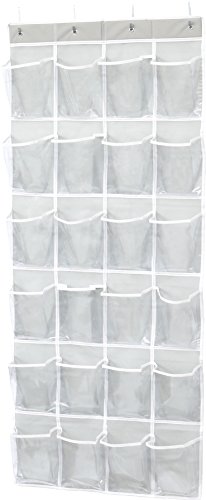
Maximize Storage with 24 Clear Pockets: Overall size 22.5" W x 56" H
Maximizing Vertical Space

The first thing that goes in an RV is not floor space. It is patience with losing floor space. Ceiling height, though, tends to stay generous, usually around six and a half to seven feet even in shorter trailers, and that one upright dimension is where most of the hanging storage lives.
Vertical space in an RV closet is what you have instead of depth. A standard S-shaped layered hanger with five tiers turns one hook into room for five pairs of pants, or the same count of skirts or folded tees. Hanger hooks work the same trick for button-downs and blouses you refuse to fold: one hook clips over a hanger’s rod, the next hanger hangs from it, and the column drops straight down rather than eating the few inches of lateral bar you actually own. I have seen closets collapse sideways from simple overpopulation; building downward protects that scarce horizontal span.
Tension bars fit the shallow cabinets pre-made shelving ignores. A twelve-inch rod wedged between cabinet walls turns dead air into a rail for carabiners, each one gripping a trash bag, a paper towel roll, a cleaning bottle by its trigger loop. No drill, no brackets, no trusting wall composition you cannot see, and the whole thing lifts out when the cabinet needs to serve something else.
The common mistake is treating RV walls as house walls and waiting for studs. The ceiling, the backs of doors, the recess above the bed’s pillow line: these surfaces reward the first organizer you own, the one that trains you to look up before you look around.
Multi-Use Storage Tools

Soft-sided bins with front zippers sit just as well under a lifted bed as they do in overhead compartments, which keeps one purchase working through two seasons of rearranging. I watched a dozen RV tours before I noticed how rarely anyone buys something that only fits one spot. The front zipper matters more than the fabric, because digging toward the back of a deep bin means you pull everything out; unzipping from the front lets you lift the lid you need while the rest stays stacked.
Hooks that relocate follow the same logic. A hook that only screws into one wall panel will outlive its usefulness the first time you change your layout, but hooks that slide into tracks or use a backing plate can move from bathroom to galley to closet as the trip demands. Two problems, one hole in the wall.
The Sorbus bins travelwithted used run about $17.50 each in a two-pack. That price only makes sense if the bin solves more than one problem. Under the bed for bulky layers in shoulder season, overhead for T-shirts in summer: same zipper, same handles, no second purchase. If it only fit one space, it would sit empty half the year, and $35 would look a lot heavier.
What to Buy First

The first fifty dollars in an RV goes farther on hooks and rods than on anything with a motor or zipper. This starter kit lists to under that mark and covers the openings most trailers leave you with.
- Command hooks go everywhere the builder forgot a hook: the back of a bathroom door, the wall beside a bunk, the inside of a cabinet where a towel wants to live. Two packs of the medium weight ones run about twelve dollars and hold more than their cardboard suggests.
- Tension rods fill shallow cabinets and the gap above a bunk mattress where nothing else will tension in place. A pair in white or brushed metal costs eight to ten dollars. Measure the gap first; RV walls bow slightly and the rod needs the extra quarter inch.
- Over-the-door organizers are the bathroom upgrade that pays for itself in cleared counter space. The pocket kind with mesh panels dries faster than plastic and runs seven to nine dollars.
- Clear labeled bins corral the pantry overflow and the socks that migrate to the kitchen drawer. A four-pack of shoe-box size with lids is usually fourteen to sixteen dollars; the label matters more than the lid seal.
- A Ziploc bag organizer only matters if you travel with kids, but then it matters a lot. RV drawers run smaller than standard kitchen sizes, so measure the interior width before ordering the narrow version. Six to eight dollars, and the smashed box mountain disappears.
Frequently Asked Questions
What is the best way to organize a small RV?
Start by purging anything you don’t actually use, then tackle one area at a time. The biggest wins come from using vertical space with layered hangers and tension rods, and containing loose items in labeled bins so everything has a home. Roll clothes instead of folding to cut volume, and rotate seasonal items into under-bed bins twice a year.
How do you maximize storage in a travel trailer?
Use every hidden space, under the bed platform, inside cabinets, and behind doors. Add tension rods to shallow cabinets to create hanging spots for lightweight gear, and install Command hooks on walls and cabinet interiors for coats, towels, and bags. Bins create compartments inside large spaces so nothing gets lost in the back.
What RV storage products are most worth buying?
The highest-impact, lowest-cost purchases are Command hooks, tension rods, over-the-door organizers, clear labeled bins, and a Ziploc bag organizer. Together they run under fifty dollars and cover the gaps most small trailers leave: hooks for walls and doors, rods for shallow cabinets, pockets for bathroom gear, and bins for corralling clothes that would otherwise migrate.