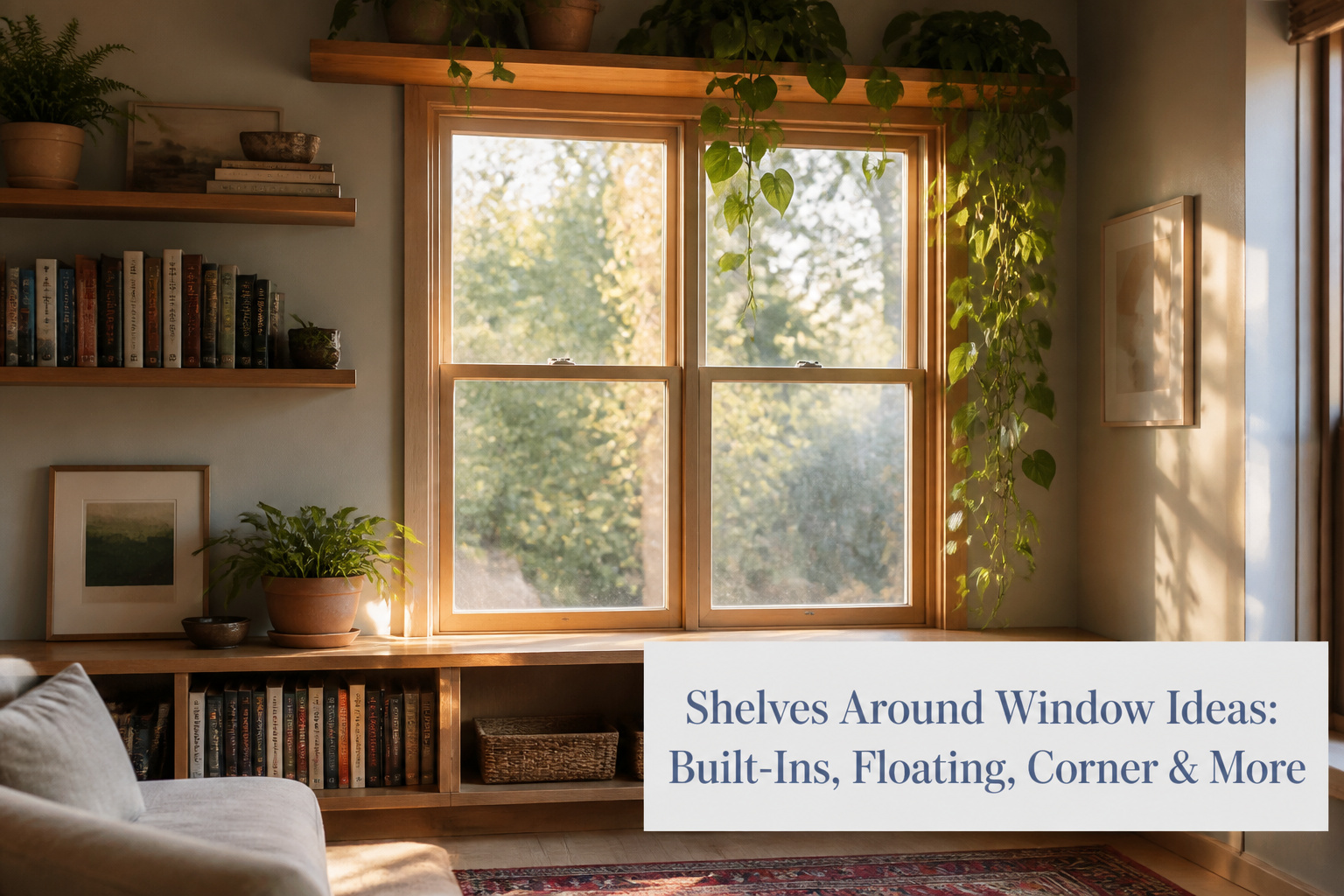
Shelves around a window turn dead wall space into storage, but only if the style matches how the room is actually used. A built-in bench with flanking shelves needs a fifteen-inch base shelf to fit real items like boots or baskets, not the even spacing most people default to. Get that wrong and the nook looks finished but stores nothing.
Built-In Shelves With a Window Seat

A built-in window seat with flanking shelves turns the gap around a window into usable depth that most layouts waste. The bench itself needs four 2x4s for the frame and three sheets of 3/4" plywood for the skin, shelves included. The base cabinet runs 36" wide, 31" tall, and 15" deep; the bottom shelf gets 15" of height for larger storage, while the upper shelves sit at 13" each.
That vertical stack keeps books and baskets off the floor without crowding the glass. Light still passes over the bench and between the uprights, so the room keeps its daylight. The bench center stays hollow, which is where seasonal items or spare linens actually fit in a finished reading nook. The fifteen-inch base shelf is the detail worth building deliberately; most people default to even spacing and end up with a bottom slot too short for a bag or boots.
Recommended Products


CONVERTIBLE CAT BED: This multi-functional cat window perch for indoor cats easily mounts to window tracks, bedside frames, or sits on the floor as a cozy cat bed. Whether by a sunny window or next to your bed, it provides the perfect spot for your cat to rest and lounge

[Smart Storage & Spacious Seating] With a generous 63"W x 15.8"D bench top, this storage bench comfortably seats 2–3 people. The clever 3-tier design maximizes every inch: the middle shelf keeps slippers, sneakers, and heels within easy reach, while the two side compartments with built-in shelves are specially tailored for boots. Together, they accommodate 5–6 pairs of shoes, keeping your entryway neat and organized.
Floating Shelves for a Minimalist Look

Floating shelves sit tight against the wall with no brackets in sight, which makes them the cleanest way to frame a window without turning the whole wall into carpentry. The hidden hardware does the heavy lifting: a metal bracket locks into the shelf itself, so the board looks like it is hovering.
Installation lives or dies on two things. The shelf must hit studs; drywall anchors will sag under real weight, especially once books or planters land on them. A stud finder is non-negotiable, and the bracket needs to sit level or the gap above the window will look crooked from across the room. Leave breathing room from the window trim too; paint layers and seasonal expansion mean a shelf butted right up against the casing will eventually bind or scar the wood.
In a small bedroom or a narrow rental living room, bulky built-ins can swallow the last bit of floor space and light. A single floating shelf above the window, or one flanking each side, gives you storage and a place for a trailing pothos without that built-in heaviness. The wall still reads as wall; the window still gets to be the feature. That lightness is why renters who cannot modify framing often choose this route over anything that reads as furniture permanently attached to the structure.
Recommended Products

𝐌𝐨𝐝𝐞𝐫𝐧 & 𝐌𝐢𝐧𝐢𝐦𝐚𝐥𝐢𝐬𝐭 𝐒𝐭𝐲𝐥𝐞 - Featuring clean lines and a rustic brown finish, these wall-mounted shelves bring warm farmhouse charm and modern style to any space. Perfect as shelves for room decoration, book shelves display, and rustic farmhouse wall decor — they elevate your bathroom wall art vibe, bedroom aesthetic, living room style, kitchen organization, office setup, and laundry room storage all in one versatile design

Material: Medium Density Fiberboard (MDF)

Well-designed Floating Shelves: Our white floating shelves for wall are made of MDF Laminate. These wall shelves can organize daily sundries to tidy your space, display your art pieces on the wall to decorate your home, and make it full of aesthetic flare.
Corner Shelves to Maximize Space

Corner shelves catch the air gap where two walls meet beside a window, the spot where a straight run of standard shelving stops short or sticks out past the casing. Angled brackets or a triangular top cut to the wall’s exact degree let the shelf follow the junction instead of fighting it, and that custom fit reads as intentional rather than leftover.
In a bathroom I redid for a friend, a pair of these flanking a frosted window held her daily skincare without crowding the vanity. The brackets cost a few dollars at the hardware store, and mounting them into both wall planes kept the unit solid in drywall that would have drooped under a single anchor point. Two-wall support is worth the extra screw. The same setup worked in a spare bedroom where floor space was tighter than the wall was long. You lose some usable surface to the triangle geometry, but you gain storage that does not eat the walking lane, and if you move out, the holes patch with a swipe of spackle.
Recommended Products

Thick Wall-Mounted Storage: Each tier of the wall mounted shelves measures 15.7"L x 7.9"W x 1.5"H, providing ample display space for your items. The floating design effectively utilizes wall space, making it ideal for creating storage areas in small rooms

Amazing Illusion - Gain practical storage space while maintaining a beautiful and elegant modern look. Once installed, these concealed shelf brackets are completely hidden from view, creating the illusion of a floating shelf. Typical shelf depths are 10" for kitchen, 8-10" for living room/bookshelves, our 6 inch large size shelf brackets will handle both with ease

𝐌𝐨𝐝𝐞𝐫𝐧 𝐚𝐧𝐝 𝐕𝐞𝐫𝐬𝐚𝐭𝐢𝐥𝐞 𝐒𝐭𝐲𝐥𝐞: The hidden bracket design gives a clean, floating look that works beautifully as home decor wall shelves in modern, farmhouse, rustic, or industrial decor styles. Adds warmth and style without overwhelming your space for bedroom decorations, farmhouse living room decor, office wall decor, nursery, entryway, kitchen, and more
Decorative Ledges for Plants and Small Items

Narrow picture ledges sit almost flush to the wall and ask almost nothing of the room they’re in. Most run three to four inches deep, just enough for a small succulent in a ceramic pot, a leaning frame, or a glass jar of dried stems. The shallow depth is intentional: light still slips past from the window behind, and the ledge itself reads as trim rather than furniture.
That same shallowness sets hard limits. These are not shelves for books, cereal boxes, or the heavy brass lamp from your grandmother. The brackets or keyhole mounts underneath are sized for distributed ounces, not concentrated pounds. A trailing pothos in a four-inch nursery pot is about right. A stack of hardcovers is not.
Structurally, the difference comes down to leverage. A standard wall shelf carries weight straight down through its bracket into a stud or anchor. A picture ledge often hangs from smaller fasteners, and its back lip or groove tilts the load slightly outward. Fine for a three-ounce frame. Risky for anything that pulls.
I have watched renters mount these in a Saturday morning, paint them to match the trim, and have herbs catching western light by dinner. The trick is respecting what they are: display rails, not storage.
Recommended Products

【Perfect solution for your walls】Our stylish floating corner shelves look classic yet modern are a great addition if you need extra wall storage for tight spaces or if you want to add green decor touch – small indoor plants, succulents, flowers. These rounded corner shelves wall mounted can free up floor & counter spaces and make places much tidier and neater for bedroom, kitchen, dining room and small spaces. (Dimension:10" W x 10" D x 1.77" H)

2-Piece Corner Wall Shelves: Turn empty corners into useful storage with this set of 2 fan-shaped floating shelves, perfect for organizing daily essentials and keeping your room tidy without taking up floor space

Simply Modern, Seamless Fit: The CUSTOS Collection features crisp right-angled lines that fits effortlessly into your home. Complete your space with matching storage furniture for a cohesive look
Custom Cabinetry Around Windows

Floor-to-ceiling built-ins around a window bank give you the most storage per square foot of any wall treatment, and the trick is getting the proportions right between what you show and what you hide. I built my last set on a 2×4 frame skinned with plywood, same bones you’d use for a window bench, which keeps the whole unit light enough to haul upstairs solo but rigid once screwed to studs. The bottom third became closed cabinets with doors, the middle stayed open shelving for books and the stuff worth looking at, and a slim crown at the ceiling picked up the room’s existing trim profile so the whole thing looked original to the house rather than bolted on.
Paint is where you decide if the unit reads as architecture or furniture. Cameo White by Behr dissolves the edges against light walls and bounces daylight deeper into the room; Graphite Charcoal by Behr does the opposite, turning the shelves into a deliberate dark frame that makes whatever sits on them pop. One blogger who went the charcoal route noted that the contrast against natural light was what made the whole thing feel intentional rather than apologetic.
These new custom floor-to-ceiling built-ins are not only a budget-friendly option, but they also add to the value of your home.
The budget-friendliness here is real because you’re buying commodity lumber and a few sheets of plywood, not ordering from a cabinet shop, and the value bump comes from the storage looking built in rather than bought. If your baseboards and window casing are simple, match them; if they’re ornate, simplify the unit’s detail so you’re not competing.
Recommended Products

Optimal Sunlight Exposure: The window sill plant shelf is meticulously crafted to ensure your indoor plants receive the essential sunlight for robust growth

CUSTOMIZABLE SHELVING: Two optional back panels let you create the ideal layout to suit your needs, mixing open and enclosed backings to help diversify your storage solution

ROTATING WINDOW PLANT SHELF: DELLAN window plant stand features a rotating mechanism that adjusts the angle of each shelf to ensure that each plant receives optimal sunlight throughout the day. The window indoor plant stands are compact in design and utilize space efficiently, allowing you to enjoy lush greenery without sacrificing floor space in your home
Materials and Durability

Plywood carries weight across a span better than MDF, which is why a shelf run longer than 30 inches wants plywood underneath if you plan to load it with books or dishes. The layered grain resists the bend that slowly appears in MDF once it sits loaded for months.
MDF paints beautifully and machines to crisp edges, making it a natural for painted built-ins in dry rooms like a bedroom or living room. Moisture is where it fails. Steam from a kitchen sink or humidity creeping out of a bathroom vent will swell the edges, and that swelling does not shrink back.
For the hidden skeleton, 2x4s do the structural work that prettier materials cannot. They carry the torque from a loaded shelf down to the floor or into wall studs, and they cost almost nothing against the price of finished lumber.
Match the material to the weight it will see, not just the look you want today. A shelf that bows after six months teaches the lesson fast enough.
Recommended Products

Used Book in Good Condition
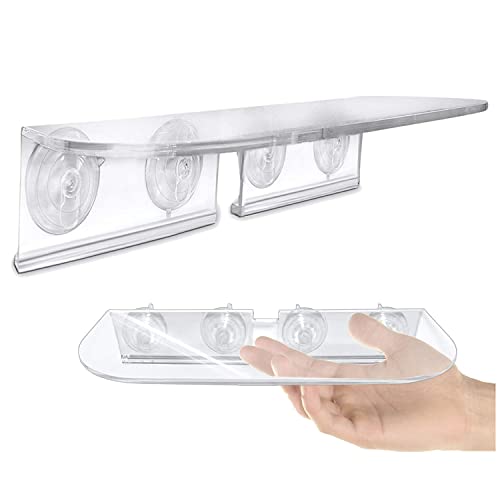
Strong Hold – With powerful double-ridged suction cups. Sticks well to smooth surfaces. Holds up to 10 lbs.

Design Considerations

The shelf style you choose should answer to what actually happens in the room. A reading nook with a single armchair can carry deep, enclosed sides that hold stacks straight, but that same depth beside a living room window blocks half the daylight you installed the window for. Keep depths shallow or leave sides open near any window that earns its keep with morning sun. I learned that distinction the hard way after boxing in a bedroom casement and spending two winters with a permanent shadow across my desk.
Height alignment matters more than most people think to put in. Run your shelves level with the top and bottom lines of the window casing, not wherever the studs land easiest. The eye reads those casing edges as the room’s own grid, and shelves that ignore them look like afterthoughts even when the work is clean.
Electrical is the thing you will not forgive yourself for missing. Test every outlet location before you lock in the final shelf positions, especially if you are planning any kind of lighting or a window seat with a charger nook. Moving a shelf three inches left is free before installation and very expensive after.
Recommended Products

Durable Material and Robust Connection : We use sturdy metal material with substantial weight, ensuring reliability and durability. Threaded joints are employed for solid connections, guaranteeing the product maintains its solidity after assembly. No worries about insufficient material or poor connections.

Package Contents: each package contains 2 heavy duty curtain rod brackets to meet your various home and office needs; This value bundle is suitable for installation in multiple locations, offering nice cost-effectiveness and convenience; Whether for setting up curtains or building shelves, it can meet your different purposes
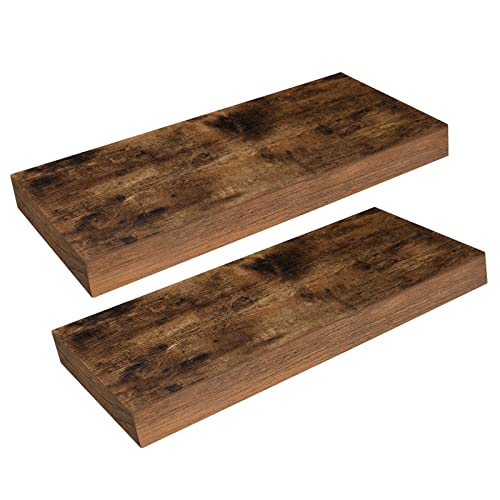
High Quality: Sized in 15.7"L x 7.9"W x 1.5"H. The 1.5" thick floating shelves for wall are fixed with Invisible and enhanced dual-pipe iron Brackets, stable with great load up to 22 lb per wall mounted shelf
Installation Tips

- Start every shelf with a level, even the short ones that look too small to matter. My last window unit sat dead straight on the front edge but dipped a sixteenth in back, and that gap telegraphs from every angle.
- Lag bolts into studs carry built-ins. Drywall anchors hold picture frames, not a loaded shelf that wants to pull forward with time and weight. If a stud lands where you need a gap, move the bracket rather than trust plastic in plaster.
- Find your outlets before any cut or fastener hits the wall. A live line tucked beside a window frame is common in older houses, and a drill bit through wiring kills the project and the weekend.
- Run the window through its full cycle, blinds and curtains too, before you lock in final depth. Sashes that swing inward need clear air; drapes on rings travel farther than they look. Leave that extra inch now, or pull the shelf back out later.
Recommended Products

Superior Quality: Our floating shelf bracket is expertly crafted from premium steel, ensuring exceptional durability and an impressive weight capacity of 110lbs.

The bracket has a 1" backplate and is designed for use with boards 1.5" thick or more.NOTE: The board thickness we refer to is the actual (not nominal) size.

VERSATILE FLOATING SHELVES: Make full use of your empty walls to create storage space for decorations and household items. Mount the wall shelves above a desk, fireplace, entryway, vanity, or between windows to add functionality.
Frequently Asked Questions
Recommended Products

Maximize Corner Potential: The 4 tier corner shelf, sized 11.8"L x 11.8"W x 47.6"H, with a fan shape fantastically turns unused corners into super practical storage sports. It is an ideal choice for optimizing space in kitchen, living room, bedroom, and office

MODERN & FUNCTIONAL DESIGN: Clean lines with a compact footprint; this book shelf features 3-tier open shelving for decor or daily essentials, ideal for living rooms, bedrooms, or home offices
What are some ideas for shelves around windows?
Built-in shelves with a window seat turn wasted wall depth into storage and seating, floating shelves give a clean minimalist frame without visible brackets, corner shelves catch the gap where two walls meet, and narrow picture ledges work for plants and small display items. Each style answers to a different room size and how much weight you need it to carry.
How do I install shelves around a window?
Start with a level on every shelf, even short ones, and anchor into studs with lag bolts for anything that will carry real weight. Find your outlets before cutting or drilling, since live wiring beside window frames is common in older houses. Run the window, blinds, and curtains through their full motion before locking in final depth so nothing binds.