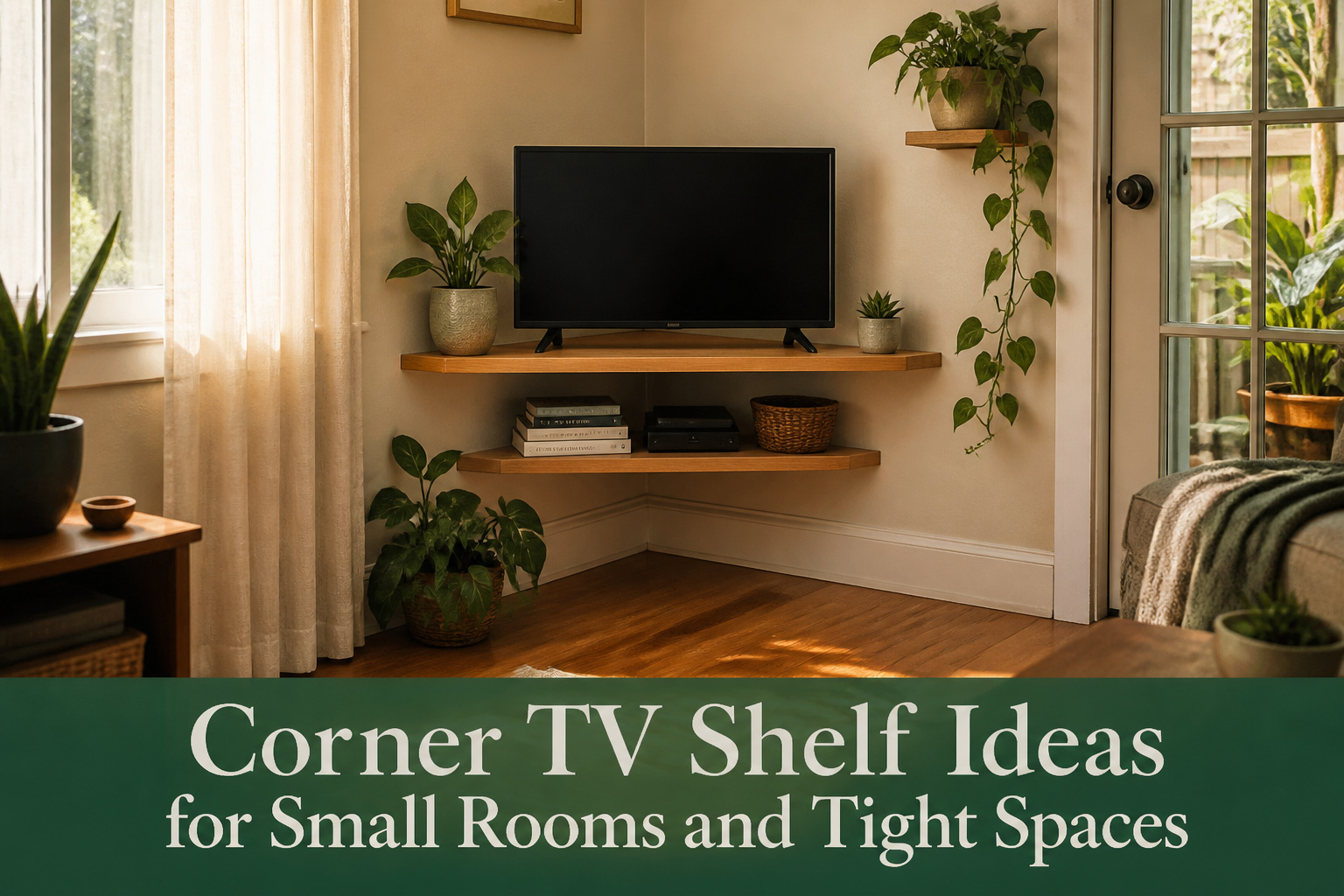
Corner TV shelf ideas run from a $40 floating ledge to full sliding panel systems that hide the screen entirely, and the one that fits your room depends on whether you need the floor space more than you need the clutter out of sight. The floating option keeps a 450 sq ft room breathing by leaving the floor open, but only if you have solid wall backing; drywall anchors sag, crack, and eventually drop something expensive.
1. Hidden Cable Channel

A hidden cable channel built into the back rail of a corner TV shelf routes every cord behind the unit and out through a single exit near the floor. The gap sits against the wall, so from the front the shelf looks like a clean box floating in the corner with no power strips or HDMI cords snaking down to an outlet.
I am picky about messy cords, so this detail matters more than the finish to me. The channel needs only about an inch of depth behind the uprights; most standard shelf kits leave that space naturally where the back panel meets the wall. Run the power strip itself up inside the channel and you eliminate both the dangling black brick and the decision of where to hide it.
If you are buying a shelf without this feature, a cable management sleeve the color of your wall does most of the same work for under ten dollars. The sleeve gathers cords into one bundle and sticks with adhesive strips, though you will still see the line where it drops. The built-in channel wins for renters who want the built-in look without tearing into drywall.
Recommended Products

Solid Wood Corner Shelf: Magically Free Your Home from Clutter! The classic corner wall shelf can help make full use of the empty wall, which is much more space-saving and makes your room look larger and tidier.

【Versatile Sizes】 Offering three different sizes, this Wall-Mounted Floating Shelf provides ample flexibility to store a wide range of items, from small accessories to larger decor pieces.

MODERN ELEGANCE: Enhance your home decor with our set of 2 black floating corner shelves, featuring a sleek and unique curved design that adds sophistication to any room.
2. Simple Floating Corner Shelf

A single floating corner shelf mounted under the TV keeps the footprint at zero and the budget under $40. Wall anchoring is where most people trip up: corners rarely give you a stud where you need one, so you are often drilling into the intersection of two walls and hoping for solid backing. The sources mention reinforced wall studs or high-grade anchors to prevent sagging over time, and in a corner, that advice doubles in weight. I would plan on a toggle bolt rated for the shelf’s load plus whatever you are setting on it, a streaming box or a slim soundbar, and I would not push past the manufacturer’s weight limit even if the shelf looks like it could take more.
The floating look is what makes this work in a small room. A bulky media unit boxes the space in; the same gear on a wall-mounted ledge lets the floor stay open and the eye travel through. In a 450 sq ft place, one source notes, this setup made the whole corner feel lighter and less bulky. The trick is restraint: one media box, maybe a remote, and stop before it becomes a catch-all. A slim shelf stays easy to dust and keeps the corner from reading as cluttered.
Recommended Products

Premium Corner Cord Concealer: Designed for hiding cables in corner walls, behind wall-mounted TVs, along baseboards, or at ceiling corners, and can also be used under desks. ZhiYo corner duct cable raceway made of new quality hard PVC with enhanced flame-retardant properties

Passing the UL94 V-0 Rating test, a plastics flammability standard released by Underwriters Laboratories of the United States, UL94 V-0 Rating is defined as Burning stops within 10 seconds on a vertical part allowing for drops of plastic that are not inflames, which means it's safer than ordinary materials because of the higher flame retardancy and brings greater security to your daily use

Premium Corner Cord Concealer: Designed for hiding cables in corner walls, behind wall-mounted TVs, along baseboards, or at ceiling corners, and can also be used under desks. ZhiYo corner duct cable raceway made of new quality hard PVC with enhanced flame-retardant properties
3. Triangular Shelf at the Corner Point

A triangular shelf fits the corner like a puzzle piece, with the wide center section deep enough for the TV and the sides tapering off to shallow ledges for remotes or a small plant. Most rooms meet at 90 degrees, so the shelf geometry is straightforward, but trim, baseboards, and wall texture rarely cooperate with that number on a tape measure. Measuring from the actual corner point outward along each wall gives the real angles, and a cardboard template cut to those lengths lets you test the fit before committing wood to the saw. The reveal gap, that thin line where wall meets shelf, shrinks once you know whether to cut 89 degrees or 91. I have seen a shelf that looked perfect on paper sit half an inch off the paint because someone trusted the corner without checking. Two straightedges held together at the corner will show you the truth fast, and the gap lets you mark the true point where the shelf needs to start its triangle.
Recommended Products

VINTAGE ELEGANCE: Crafted from premium particleboard, the corner wall shelves create a rustic and clean look, match with any of your decor and perfect for organizing everything, enhance vintage aesthetic for your space
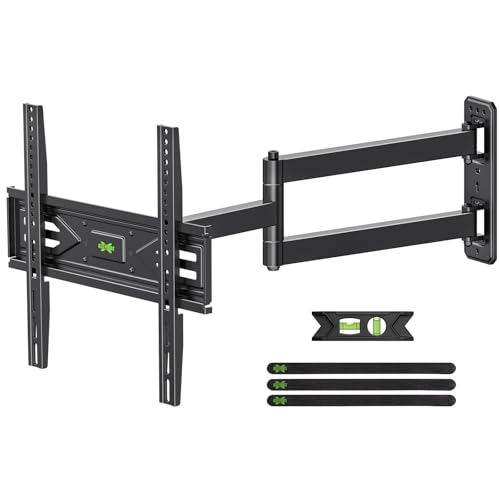
Wide Compatibility: This Long-arm TV wall mount is compatible with 26" to 65" TVs and supports VESA patterns from 75x75mm up to 400x400mm. Additionally, this wall mount TV bracket ensures easy installation, whether your walls are concrete, brick, or wood stud.

📐【CLEAR CORNER FIT】Overall dimensions are 46.5"W x 15.5"D x 7.5"H. For corner installation, the unit measures 23" along one side, with a 32.75" distance from the corner to the front edge.
4. Two-Tier Shelf for Extra Gear

A two-tier corner TV shelf keeps the screen steady on top while the console, receiver, or DVD player lives on a lower plane. I like this setup best when the TV is not wall-mounted. You get one clean footprint instead of a tower of electronics.
The gap between tiers matters more than most people guess. Eight to ten inches of vertical space will clear most gaming consoles and stand-alone receivers without forcing you to stack boxes. Go tighter and you are pulling the whole shelf forward every time you need to swap a cable; go looser and the whole thing starts to look like two unrelated pieces stacked by accident.
Ventilation is the quiet problem. Components stacked flat against each other cook themselves over time. A few inches of open air above each box, plus whatever gap the back panel leaves, lets heat ride out instead of looping back in. If your shelf back is solid board, consider whether the kit you are running really belongs there.
Recommended Products

🌳STURDY STRUCTURE: Crafted from thick wooden boards, TV entertainment center features two support bars for stable and secure wall mountingg and can support weights of up to 50 lbs.

📺【Built-in Power Hub with USB Ports】Features a convenient built-in power strip with 2 AC outlets and 2 USB charging ports. Power your TV, game console, soundbar, and router while charging tablets and phones simultaneously, eliminating cord clutter for a clean entertainment setup.

【Mid-Century Modern Design】Measuring 53.94"W x 15.75"D x 18.9"H, the walnut TV stand with storage is suitable for TVs up to 60 inch, features a distinctive mid-century modern style, with elegant fluted doors and a walnut finish for your living room or bedroom
5. Cabinet Doors Below

Closed storage underneath a corner TV shelf keeps controllers, game cases, and the cable tangle out of sight fast. The catch is that cabinet doors add depth you may not have. I have watched a single hinge-swing door solve this in tight corners because it opens within the same footprint, no clearance needed into the room. Sliding doors work too, though the track hardware eats an inch or two inside the cabinet and can cut into usable height for taller game cases. The tradeoff is straightforward: you gain visual calm and lose some floor space to the box itself. In a small room that tradeoff is real, and a corner mount with enclosed storage below only works if you measure the swing arc before you buy. Open shelves read lighter, but the moment you have accessories to hide, doors earn their depth back.
Recommended Products
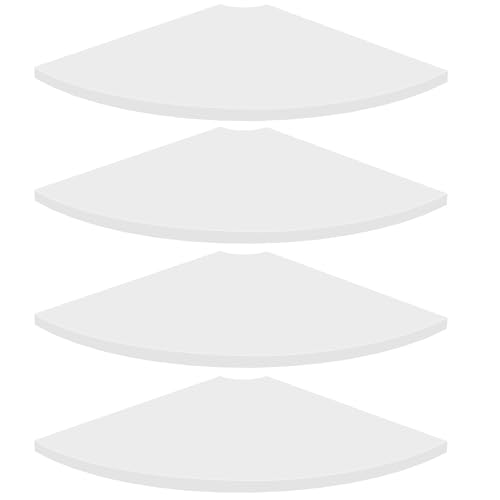
Modern & Elegant: Enhance your home decor with the round wall corner shelf, featuring a charming modern white finish and unique curved design. These shelves add a delightful rustic touch that complements any style, making them perfect for organizing your space and enhancing its vintage aesthetic

STYLISH & ELEGANT: Transform your corner into an elegant and practical display area using our charming Set of 4 Wooden Corner Shelves Wall Mounted! These corner shelves provide additional storage while keeping your items organized.

【FSC MIX Certified Engineered Wood】Crafted from FSC MIX certified engineered wood, this corner shelf combines a smooth finish, reliable durability, and a clean modern appearance, providing stylish storage and display space for any room
6. Tall Tower for Vertical Storage

A narrow tower built for the corner can park your screen at seated eye level while shelves above and below grab everything else. The center of the screen should sit 42 to 48 inches from the floor, which lines up with most sofa sightlines without craning your neck upward. The tower I keep coming back to stacks heavier gear low, where the base keeps it stable, and reserves the upper shelves for lightweight pieces that stay put if the unit shifts.
Floor space stays almost untouched since the footprint stays slim, but the tradeoff is depth. A tower only works when the corner is deep enough that the front edge sits clear of your walking path. In a shallow corner the projection into the room turns into a hip-check hazard every time you cross the room. Measure from the corner out to where your traffic line runs, then subtract the tower depth; anything under about 18 inches of clearance left over is probably too tight.
Recommended Products


[Material Composition]: Constructed using MDF, particle board, solid wood, and steel, this wall-mounted TV stand offers a robust and durable structure suitable for everyday use

📐【CLEAR CORNER FIT】Overall dimensions are 46.5"W x 15.5"D x 7.5"H. For corner installation, the unit measures 23" along one side, with a 32.75" distance from the corner to the front edge.
7. Built-In Look With Trim

A freestanding corner unit reads temporary until trim bridges the gap between furniture and architecture. I started noticing this in older apartments where the baseboards and crown molding already do half the work of convincing the eye.
Match the existing trim profile exactly, or the mismatch shouts "added later." Most hardware stores carry colonial, ranch, and ogee profiles; hold a scrap against your wall to confirm before buying. Paint to match the wall color, not the shelf finish. A tone-on-tone treatment lets the silhouette feel built-in while the color keeps the visual weight low.
The real trick is the gap where shelf meets plaster. Quarter-round, squeezed flat against the edge and pressed to the wall, closes that shadow line for under ten dollars. Caulk the top bead, paint it wall color, and the shelf settles into the corner like it grew there.
Recommended Products
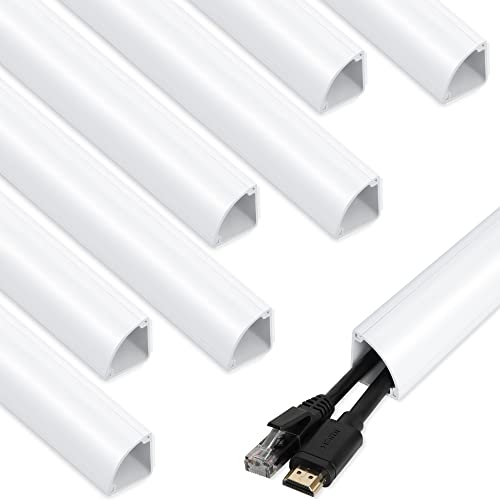
Enhanced Safety and Quality: Made from new PVC material with an odorless, pure color; Achieves the highest fire-resistant UL94 V-0 rating for superior safety. ZhiYo Cord Hider ensures lasting durability without yellowing over time

STYLISH & ELEGANT: Crafted from premium particleboard, the corner wall shelves create a rustic and clean look, match with any of your decor and perfect for organizing everything, enhance vintage aesthetic for your space

Solid Wood Corner Shelf: Magically Free Your Home from Clutter! The classic corner wall shelf can help make full use of the empty wall, which is much more space-saving and makes your room look larger and tidier.
8. Center Support Post

A corner TV shelf with a single center support post drops the heavy visual weight of side panels without dropping your screen. The post sits right at the front corner where the two back walls meet, carrying vertical load straight to the floor while both sides stay completely open.
Placement matters more than you’d think. That post needs to land just far enough forward that it doesn’t intercept the IR sensor on your TV or any components sitting below. Most remotes and devices depend on a line-of-sight window near the bottom center of the unit, so set the post slightly off-center toward the front face, not directly into the signal path. Check where your sensor actually is before you drill, a two-minute look at the manual saves a two-hour re-build.
Wood warms the whole thing up and keeps the reading lighter than metal. It’s not floating, but it is honest about what holds it up, and the trade for that small loss of airiness is the ability to sleep through the night without wondering if your mount is giving out. I side with the post every time a forty-pound screen is in the equation.
Recommended Products

{UNIVERSAL COMPATIBILITY}:This corner TV wall mount is compatible with a wide range of TVs from 26 - 55 inches( 26 30 32 36 40 42 43 46 48 49 50 55”) includes most major brands. VESA patterns from 75x75mm to 400x400mm

MAXIMIZE YOUR ROOM SPACE: Set of 3 corner floating shelves make full use of the blank corners in your room to increase more storage space, keep your room organized and neat, reducing clutter, also highlighting your rustic decor. A great addition to your living room, bathroom, kitchen and office

Stylish Design for Home Decor: there are 3 different sizes of corner shelves, which will make full use of the blank corners of the room, increase more storage space, keep the room clean and orderly; The cloud shaped design creates an exquisite appearance that matches any of your decorations, perfect for organizing everything and adding a vintage aesthetic to your space
9. Sized to Your TV

The 80cm by 45cm reclaimed-wood stand I keep coming back to only works because someone sized it to the television first, not the wall. Most people reach for the screen diagonal and end up with a shelf that floats the TV or swallows it, and neither looks right.
Measure the footprint, not the diagonal: the base or stand legs your TV actually sits on. A 55-inch screen might rest on a stand only 44 inches wide but 12 inches deep, while a 32-inch set with integrated feet can spread 28 inches wide yet need almost no depth. Corner shelves ask for more depth than width, because the TV sits at an angle into the room and its stand reaches toward the corner point.
Buy or build to that footprint plus an inch or two of overhang on the visible edges, no more. An extra three inches of shelf beyond the base on each side looks like a serving tray, not furniture. If the TV base is 40 inches wide and 10 inches deep, a corner shelf at roughly 42 inches wide and 14 inches deep keeps the proportions tight while giving the stand room to sit flat on the surface without teetering on the triangular point.
Recommended Products

Corner-Saving & Farmhouse: This TV console fits neatly into corners, leaving you more room to move around. The entertainment center’s charming barn doors and black metal accents bring a rustic farmhouse vibe to your living room, giving it a warm, inviting feel
SPACE-SAVING DESIGN – This corner entertainment stand fits snugly in your living room, making it perfect for movie nights or binge-watching your favorite shows with family and friends

Unique Sliding Door: The sliding door design gives the TV stand a distinctive and appealing look. Sliding doors and wood handles combine to incorporate natural tones for modern and mid-century charm
10. Soundbar Ledge

A soundbar ledge on a corner TV shelf keeps the audio equipment centered without stealing usable depth from the main surface. Soundbars run 3 to 5 inches deep, and the ledge needs to sit far enough forward that the speaker body does not block the TV’s bottom bezel or, worse, the IR receiver that takes commands from the remote.
I built mine as a separate floating shelf in front of the main corner shelf. It took an afternoon, a drill, and a wall bracket rated for the weight. The ledge sat about two inches below the screen bottom and an inch forward of the bezel line. Remote commands still reached the TV, and the soundbar finally stopped looking like it had been set there temporarily.
An integrated ledge is the cleaner look, though it limits you if you swap the soundbar later for something wider. The separate shelf lets you adjust placement or remove it entirely. Either way, measure your TV’s IR window location before you mark any holes.
Recommended Products

1,Baby anti-tip furniture wall straps secure furniture to the wall with screws to help against furniture tipping over. Create and maintain a safe environment for your kids and pets!The furniture strap perfect for anchoring TV stand, drawer, cabinets, bookcases, dresser, armoires, bookshelf,wardrobes, and any furniture.

Child proof your home with our anti tip furniture anchors, essential for baby safety.Secure concealment furniture,dresser,cabinet baby proofing, and more. our earthquake straps ensure your tv,shelf,bookshelf,mirror stay anchored in place.ideal for toddler furniture and nursery furniture safety.

Help Reduce Furniture Tip-Over Risk Protect your home by securing tall and heavy furniture to the wall. These furniture anchors help reduce the risk of tip-overs caused by accidental pulling or climbing, making them a practical addition for homes with children and pets. Ideal for improving everyday household safety without changing the appearance of your furniture.
11. Basket Storage Underneath

Woven or wire baskets slid into cubbies below the corner TV surface hide the clutter of controllers, cables, and remotes without the cost or installation of cabinet doors. Standard cube storage baskets run 10 to 13 inches wide, and that range fits most open shelving units built for this purpose. The texture of seagrass or powder-coated wire becomes part of the styling, not just a hiding place. In tighter corners, a basket that fills its cubby completely reads cleaner than one swimming in extra room.
The tradeoff is dust on open weave and the occasional basket knocked crooked by a charging cord stuffed in hastily. Wire pulls cleaner with a damp cloth; seagrass hides dust longer but eventually needs vacuuming with the brush attachment. Either beats a loose pile of black boxes and tangled HDMI cables spilling from an open shelf.
12. Art-Like Styling Zones

A corner TV shelf works best when you treat the wall as a composed frame and the screen as one object among several. I learned this the hard way after loading every ledge with books and plants until the TV looked like an afterthought drowning in clutter. Now I keep to one small plant, one stacked book, and one object with a little weight, spaced so the eye travels rather than fixing on the screen alone.
Corners help this more than straight walls do. The two converging edges give the arrangement a natural boundary, like a picture frame. The TV sits at the visual center without needing to dominate because the composition is contained. Height matters most here; the center of the screen should land between 42 and 48 inches from the floor, slightly below eye level when seated, so the displays above and below read as deliberate rather than apologetic. Mount too high and the whole zone tilts toward the ceiling, shrinking the platforms beneath into leftovers. Get it right and the negative space reads as intention, not emptiness, the objects balanced across levels like a small still life.
13. Sliding Panels to Hide the Screen

The hardware is where this idea lives or dies. A proper sliding track system mounts above the TV and carries wooden panels that park off to the side when you want to watch, then close back over the screen for a calmer wall. Barn-style hardware is the easier find and shows on the outside; pocket systems recess into the cabinet and need roughly double the panel width in total wall span so both doors can stack clear of the opening.
Cane webbing fixes the remote problem. Solid wood blocks the signal; the woven material lets it through and still reads as furniture, not tech cover. I would budget for real hardware and fake the cane with regular webbing from a craft store if the decorative panels run too high.
This much effort only pays off in rooms where the TV has to face shared space. The dining area, the foot of the bed, anywhere the black rectangle feels like an intruder. A basic corner shelf in a stand-alone TV nook does not need this.
14. Secret Charging Drawer

A shallow drawer tucked under a corner TV shelf hides the one thing that ruins almost every small living room: the charging pile. I keep a power strip with USB ports inside ours, drilled straight through to the shelf above so the cables pass through neatly. The drawer itself only needs to run about 2 to 3 inches deep, just enough for remotes and spare cable slack. Leave the power strip ventilated and within easy reach; a drawer you have to wrestle open every time you want to plug something in becomes a drawer you stop using. The best setups have a simple grommet in the back panel, air gap around the strip, and the whole thing on drawer slides that extend fully so you can see what you are doing.
Cable Management That Actually Works

After installing a corner TV shelf, the cords become the thing you notice first. A few minutes spent on routing makes the difference between a setup that looks considered and one that looks like you gave up.
- Adhesive cord channels (the flat, paintable kind) run along the bottom edge of a floating shelf or the face frame of a cabinet and hide every wire below eye level. Paint them the wall color, not the shelf color, so they disappear against the plaster instead of reading as trim.
- Cable management sleeves work best for the bundle that drops from the TV to a console or outlet. Neoprene ones flex around tight corner angles and gather everything into one soft tube you can push behind the shelf bracket or down the wall gap.
- Velcro ties beat zip ties for anything you will touch twice. A power cycle, a new streaming stick, and a hardwired zip tie means scissors and regret. I keep two widths in the junk drawer and replace them whenever the pile under the TV grows a new branch.
- Run power up from a floor outlet when you have the choice. A cord dropping from the ceiling or a high outlet crosses the visual field at chest height and has to be hidden with furniture or art. A cord rising from baseboard level stays below most sightlines, especially with a low media shelf blocking the last six inches. If you are renting and the only outlet is high, a cord channel straight down to a baseboard raceway still looks tidier than a dangling loop.
The hardest cord to hide is the one you add six months later for a soundbar you did not plan on. Leave a half inch of slack somewhere accessible and you will thank yourself when the upgrade arrives.
Why Floating Shelves Read Bigger

A single slim floating corner shelf under a wall-mounted TV keeps the whole setup from feeling bulky. In a 450 sq ft place, that one move made the difference between a crowded corner and one that actually breathes. The shelf held just a small media box, nothing else, which meant the floor stayed clear and dusting took about ten seconds.
The catch is what lives inside your wall. Floating shelves need real structure: studs, solid blocking, or a bracket system rated for the load. Drywall anchors alone will sag, then crack, then drop something expensive. If you are renting and the lease forbids hole drilling, a floating install becomes a fight with your deposit. Same problem if the wall is old plaster with no lathe left worth gripping, or if you are still running a heavy CRT that weighs more than the shelf itself is meant to carry. A bulky media unit on legs starts looking like the smarter call in those cases, even if it eats a few more square feet.
Storage Without the Bulk

Cabinets, baskets, and open shelving each handle clutter differently in a corner TV setup, and the right choice depends more on what you need to hide than on looks alone.
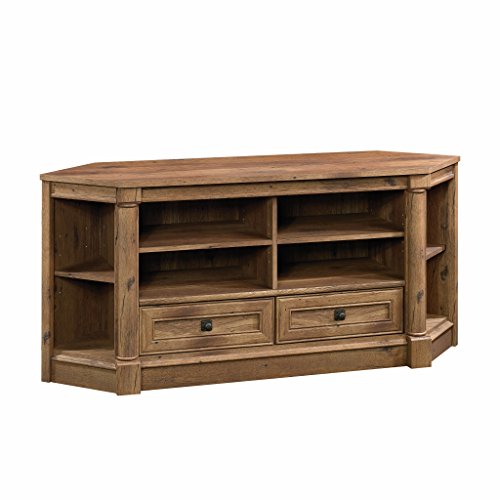
A corner TV stand with lower cabinets works in rooms where the living happens in that same corner: game cases, remotes, and the router disappear behind doors, and the oak unit with rattan panels I keep seeing lately adds texture without reading as heavy furniture. The tradeoff is floor footprint; a cabinet that deep still juts into the room.
Floating shelves keep the floor clear, which reads as open space in studios and smaller bedrooms. The catch is that every item sits in view, so this only works if your actual clutter is thin and color-coordinated to begin with.
Woven baskets slipped beside or under a console split the difference: they hide blankets and larger gear, but they pull out in a few seconds for cleaning or re-sorting. I think of them as the renter’s compromise, since they move with you and work whether the TV wall is cornered or straight.
In rooms under about 150 square feet, enclosed storage usually wins; anything larger can handle the casual shape of open shelving or a basket pair.
Balancing the Screen With Everything Else

A corner TV setup pulls the eye to one side of the room by default, so the trick is giving that eye somewhere else to travel. I like the narrow wooden panel trick, running a strip a shade darker or lighter than the wall behind the screen. It builds depth without eating space, and in a compact living room that little layer keeps the TV from reading like a black hole punched in the plaster.
Height matters just as much as width. The center of your screen should sit 42 to 48 inches off the floor, and in a corner that puts the TV’s mass low enough that you can balance it upward. A vertical element on the adjacent wall, even a simple tall plant or a slim shelf stack, draws attention up and spreads the visual weight so the corner does not feel like a dead end.
The corner itself is already doing half the work. Two walls meeting at an angle frame the screen like built-in bookends, which is why that trim-around trick works so well. A little molding where the shelves meet the walls turns an awkward angle into deliberate architecture.
Frequently Asked Questions
What are some corner TV shelf ideas?
Floating shelves, triangular shelves that fit the corner angle, two-tier units for extra gear, tall vertical towers, and shelves with built-in cable channels all work well in tight spaces. Each style handles a different problem: floating types keep the floor clear, triangular ones match the wall angle exactly, and two-tier designs separate the screen from consoles without stacking.
How do I manage cables for my corner TV shelf?
Look for a shelf with a hidden cable channel built into the back rail, which routes cords behind the unit and out through a single floor-level exit. If your shelf lacks this feature, a cable management sleeve in a wall-matched color gathers cords into one bundle for under ten dollars. Adhesive cord channels painted to match the wall also hide wires along shelf edges below eye level.
What is the best height for a corner TV?
The center of the screen should sit 42 to 48 inches from the floor, which lines up with most sofa sightlines without neck strain. In a corner, keeping the TV’s mass low enough lets you balance it upward with vertical elements on nearby walls so the corner does not feel like a dead end.